

Picking out furniture for a home office sounds simple until you actually stand in the room with a tape measure and a dozen browser tabs open. A desk that looks stunning in a showroom photo could feel completely out of place once it sits against your own walls, your own flooring, and the couch you already own. How to choose a home office desk comes down to a handful of practical decisions, not a lucky guess.
The right home office desk that matches home decor pulls a room together instead of standing apart from everything else in it. Keep scrolling to figure out measurements, materials, colors, shapes, and a handful of designer habits that make a workspace look intentional. Plus, we wrapped up a quick list of three standing desks that will make your workspace actually suit your daily grind.
Table of Contents
Measure Your Workspace
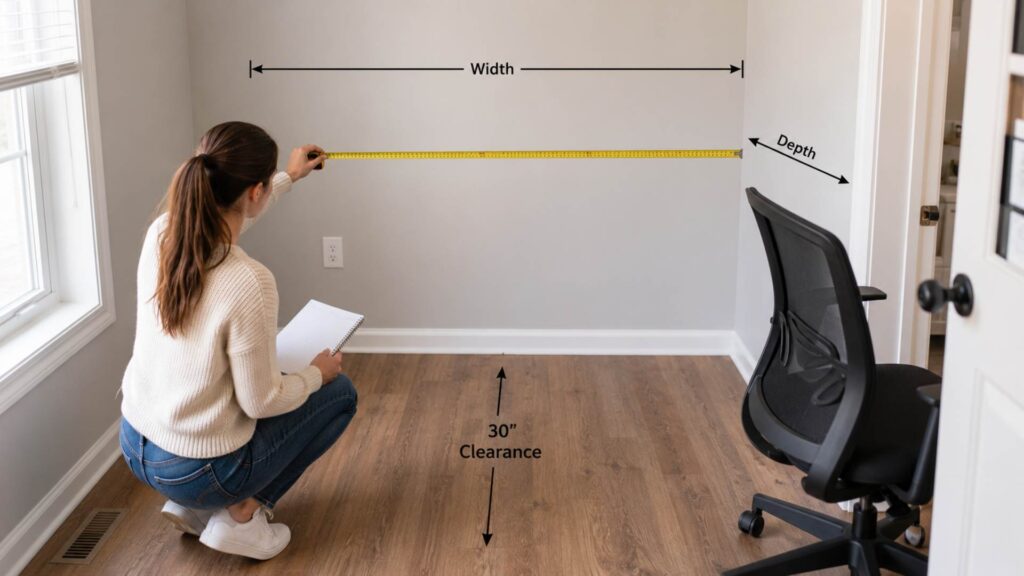
Before anything else, measure the actual space where the desk will live. Note the width and depth of the wall or corner you have in mind, and leave at least 30 inches of clearance behind the chair so you can push back and stand without hitting a wall or a bookshelf.
A home office desk that fits your room layout on paper could still feel cramped in person if you forget about door swing, window placement, or a radiator that eats up floor space. Measure twice, since most return policies do not cover a desk that simply will not fit through your hallway.
If natural light matters to you, note where the sun hits the room at different times of day, cause a glossy desktop finish can throw glare across a monitor by early afternoon. This step matters more than people expect, and skipping it is the most common reason a proper desk buying guide gets ignored until the desk is already sitting in the wrong spot, half assembled, unable to fit through a doorway nobody thought to check.
Match the Desk to Your Interior Style
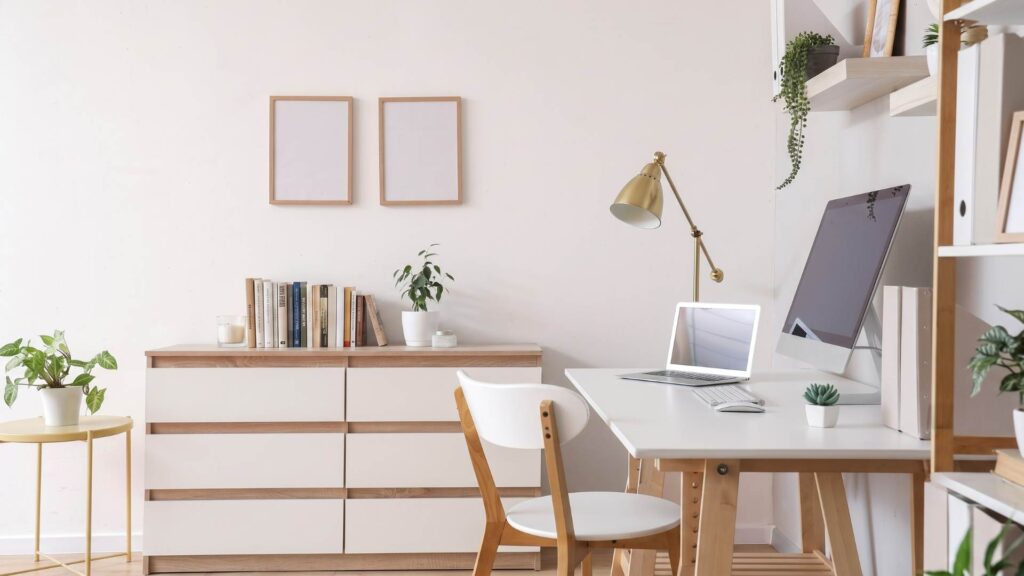
Home Office Desk for Any Interior starts with knowing what you are already working with in the room. Getting the desk style right is easier once you know which category the room already falls into, and a home office desk should echo the lines and materials already present.
- Modern interiors lean toward clean edges, minimal hardware, and a modern office desk with a flat top and hidden cable routing fits right in.
- Scandinavian rooms favor light wood tones, simple legs, and almost no ornamentation, so a pale oak or birch desk blends in without adding visual noise.
- Industrial spaces pair raw metal frames with reclaimed or dark stained wood tops. That combination echoes exposed brick or black pipe shelving already in the room.
- Farmhouse style calls for turned legs, painted finishes, and a slightly worn look that feels collected over time instead of bought last week.
- Traditional interiors suit dark wood, brass or bronze hardware, and a more substantial silhouette that matches crown molding or built in bookshelves.
Getting this part right is what separates a home office desk that matches home decor from one that simply occupies a corner. Workspace design succeeds when the desk reads as part of the room’s original plan, not an afterthought pulled in from a clearance sale.
Choose a Material That Complements Your Furniture
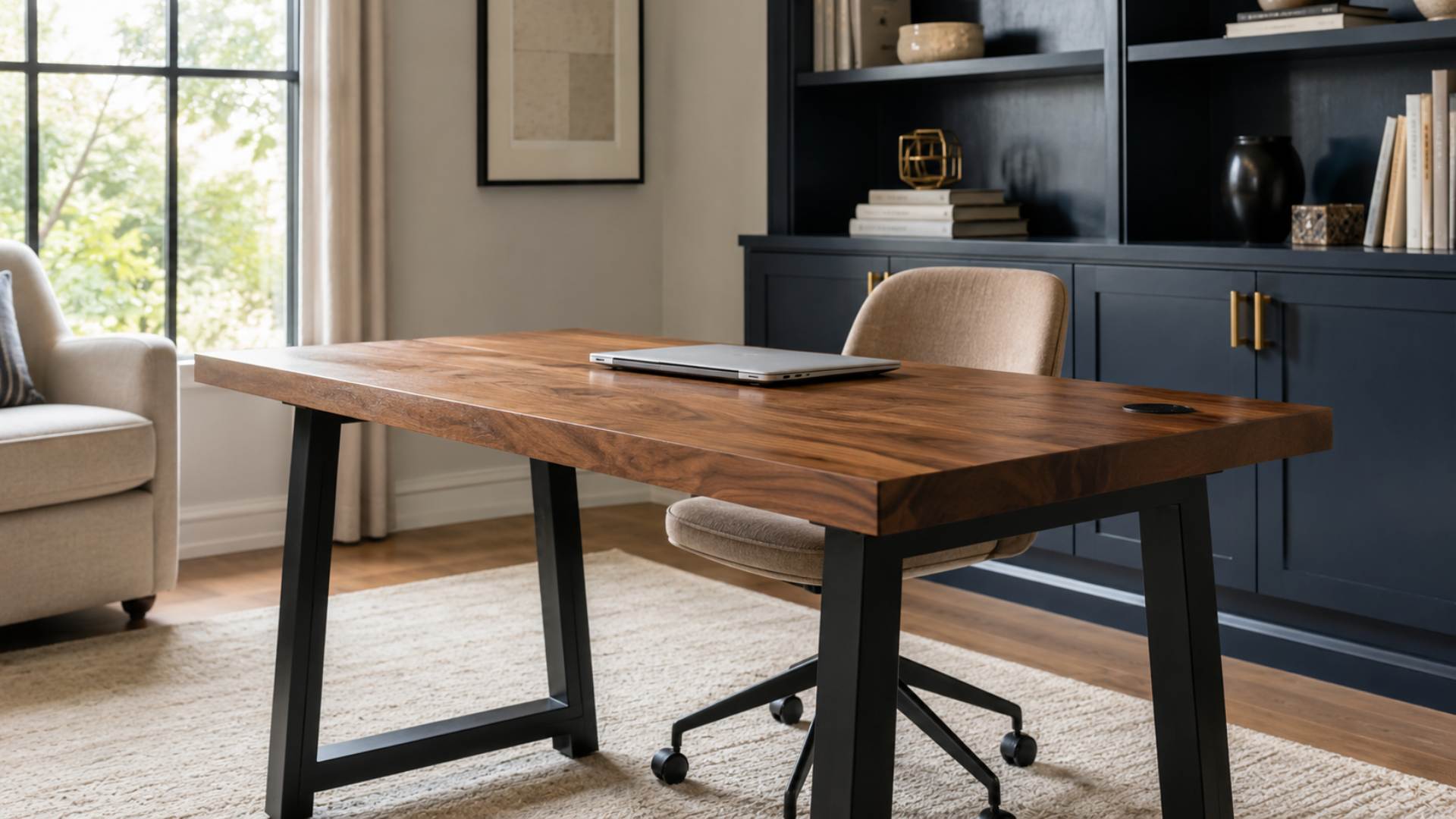
Wood remains the most common choice for home office furniture, and for good reason. Oak and walnut both hold up for decades, and a warm wood finish pairs easily with almost any existing furniture in the room. Metal desks, usually paired with a laminate or wood topped surface, suit modern and industrial spaces best, since the frame itself becomes part of the visual style instead of hiding underneath a skirt panel.
Glass desks work in small rooms where a solid material would feel heavy, since light passes through and the desk visually disappears against the wall behind it. Mixed material desks combine wood tops with metal legs, and they have become the most popular middle ground for a home office desk.
Whatever you land on, try to match the material to at least one other piece of workspace furniture already in the room, whether that is a bookshelf, a credenza, or even the window trim. That way the desk feels chosen instead of ordered off the first page of search results, and the whole room reads as one piece of office furniture instead of several unrelated purchases.
Pick a Color That Blends with the Room

Color carries more weight than most people expect when picking a desk. There are lots of lots of color combinations you could choose from. White desks brighten small or dark rooms and disappear into most color schemes. At the same time, black desks add contrast and read as more formal.
They work especially well against pale walls or in rooms already built around dark accents. Oak toned desks bring warmth without leaning too rustic, and they pair naturally with beige, sage, or soft gray walls.
Desk colors should never fight the wall color directly behind them. A home office desk in a shade close to the wall tends to recede, while a desk in a contrasting tone becomes a focal point, which only works well if that is actually the effect you want in the room.
Select the Right Desk Shape
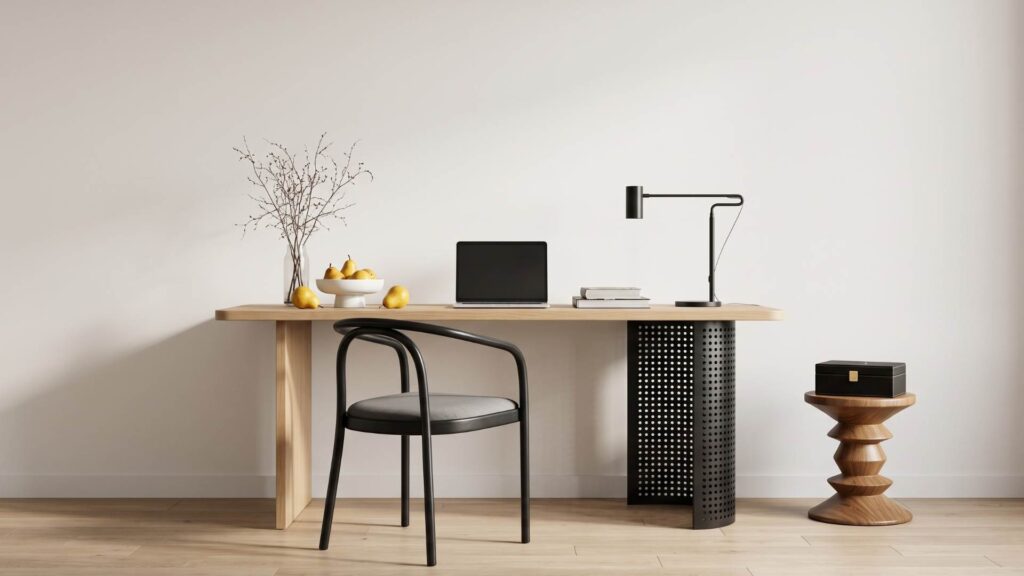
Writing desks keep things simple, with a flat surface and thin legs that suit small rooms or anyone who works mostly on paper and a laptop.
- Computer desks add a bit more structure, often with a raised shelf or small hutch for a monitor, which helps anyone searching for a straightforward desk for home office use without much fuss.
- L shaped desks wrap around a corner and give you two full work surfaces, useful if you split time between a computer and physical paperwork or craft projects.
- Corner desks save floor space in small rooms and tuck a home office desk into a spot that would otherwise sit empty.
Standing desks have grown popular for a reason. Research published through the American Journal of Preventive Medicine has linked long stretches of sitting to higher rates of cardiovascular issues, and a standing desk gives you the option to shift positions throughout the day.
Being able to stand up and sit down whenever you want is really the whole point. Productivity and improved posture are the two benefits people notice fastest, though comfort still depends on more than the desk itself. Use a standing desk at home for a while, whether you work barefoot or in supportive footwear, and your legs and lower back will feel the difference by late afternoon either way. Any work from home desk you choose should hold up to years of daily typing and video calls.
Look for Features You’ll Actually Use
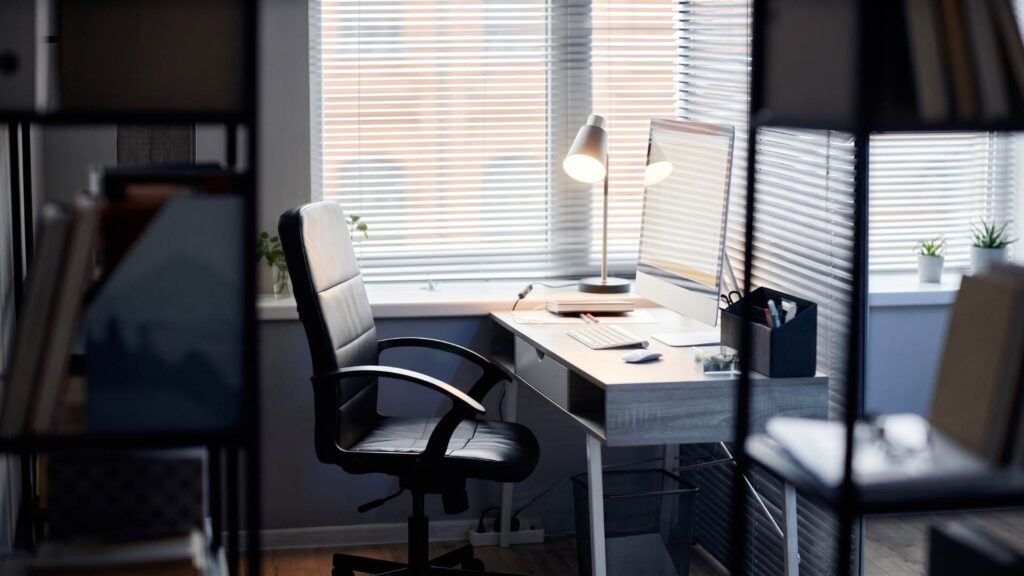
Drawers matter more once you actually start working at the desk every day. Paperwork, chargers, and notebooks need somewhere to go besides the desktop itself. Desk storage built into the frame keeps the surface clear without adding a separate filing cabinet to the room. Shelves, whether built in or added afterward, give you a spot for books or a printer without eating into legroom underneath.
Cable management, usually a grommet hole or a tray mounted underneath, keeps cords from turning into a tangled mess behind the monitor. It is a small detail, but it changes how tidy the whole setup looks day to day. A durable surface resists scratches, water rings, and the general wear that comes with years of daily use. Laminate holds up well for the price, while solid wood needs occasional care but ages with more character.
Picking a home office desk with even two or three of these features saves you from buying accessories later to patch over what the desk should have included from the start, and it goes a long way toward a home office setup that actually works for you every single day.
Balance Style with Comfort
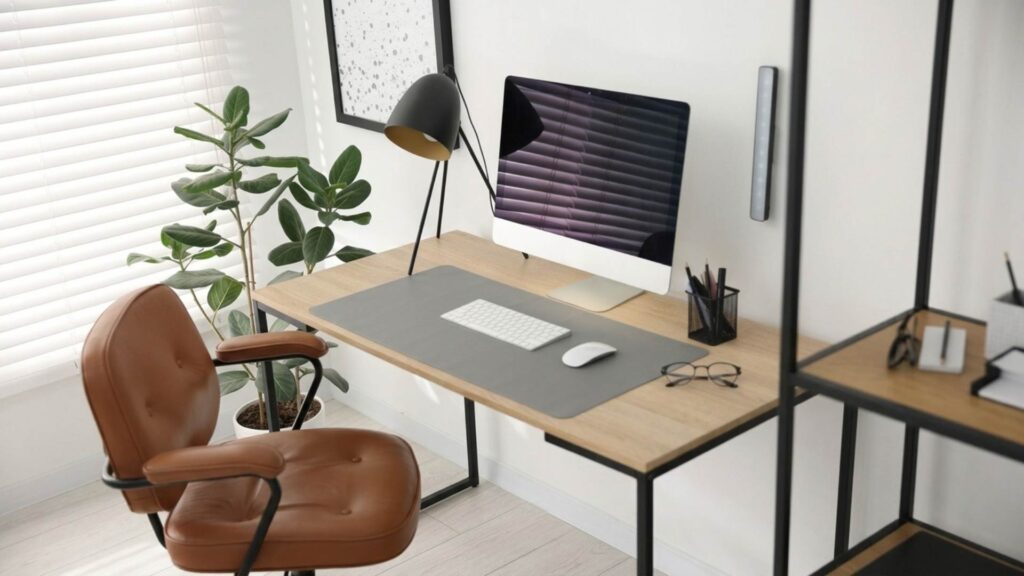
Proper desk height keeps your wrists level with the keyboard instead of angled up or down, something most people don’t think about until their wrists start hurting near the end of the week. Legroom needs to fit your actual body, not just the average listed on a spec sheet. Sit at the desk before buying if you can, or check the clearance measurement against a chair you already own.
Workspace depth affects more than storage. If you deal with chronic shoulder and neck pain, a deeper desktop lets your elbows rest properly while you type, and keeps your monitor a comfortable distance away instead of sitting right in your face.
Everyday usability is the real test of any home office desk. A desk that looks striking in photos but forces you to hunch or twist all day will get abandoned within a month. An ergonomic setup does not require expensive gear. It usually just needs the right height, enough depth, and a chair that actually supports your lower back through a full workday.
Designer Tips for a Cohesive Home Office
- Match Your Home Office Desk with Your Decor by treating the desk as one piece of a larger room.
- Coordinate wood tones throughout the room.
- Match metal finishes across hardware, lighting, and the desk frame itself.
- Layer task and ambient lighting instead of relying on one overhead fixture. A desk lamp for close work, paired with softer ambient light in the rest of the room, makes a home office desk feel like part of a finished space instead of a lit up corner.
- Add greenery without cluttering the desk. A single plant on a shelf or windowsill does more for the room than three small pots crowding the actual work surface.
- Use decorative storage baskets to hide cords, chargers, and paperwork that do not need to sit in view all day.
- Keep the desktop clean and functional. A home office desk that matches home decor still needs room to actually work, so resist the urge to style it like a catalog photo you will never touch again. Among practical office desk ideas, a mostly clear surface photographs better and functions better at the same time.
Best Home Office Desks for Different Decor Styles
If you would rather skip the search and start with a shortlist, these three standing desks cover a good range of styles, sizes, and price points. One is compact and simple, one is wide and budget friendly, and one is a full executive setup with drawers built in. One thing to know upfront, you will not see a power cord in most product photos, but you will need a nearby outlet for the lift motor to work. Here is a closer look at what makes each one worth a second glance before you choose a home office desk for your own space.
The Compact Everyday Standing Desk
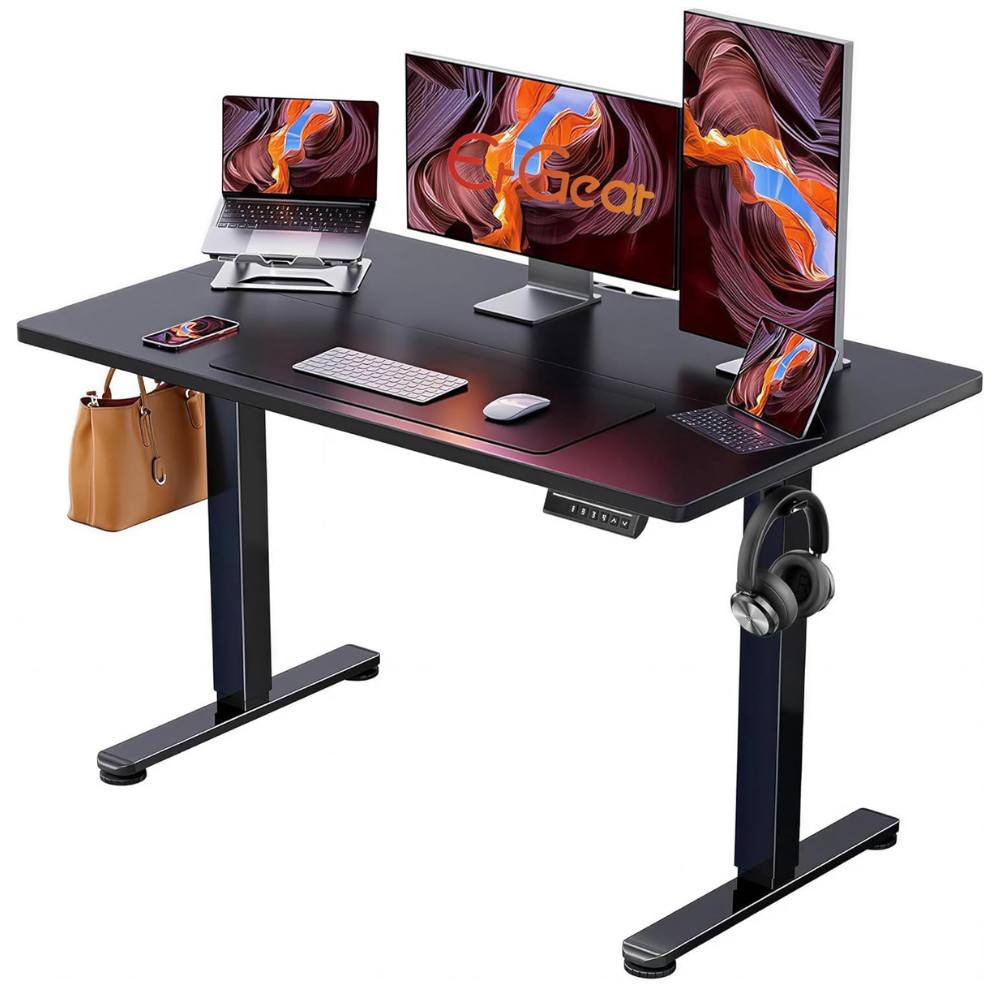
ErGear Height Adjustable Electric Standing Desk
- A steel framed electric standing desk with four memory presets, a quiet motor, and a sturdy build for compact offices.
This one keeps things simple, and it might be exactly what you were looking for if floor space is tight. The steel frame feels hefty and well made, and the electric lift mechanism stays slow, smooth, and easy to adjust. Four memory presets mean you are not resetting your preferred height every morning.
Assembly is straightforward, the hardware ships in its own bag, and a couple of leftover screws at the end usually just means you already used the ones you needed. A power drill speeds up the base plate screws over the included tools.
Some buyers admit they worried it would be wobbly, but it is not, and the frame is tested for 100,000 lift cycles at a pretty reasonable price. The motor stays impressively quiet too. It runs well under fifty two decibels, and it fits perfectly along a long, blank wall in a smaller office.
The Wide Budget Friendly Standing Desk
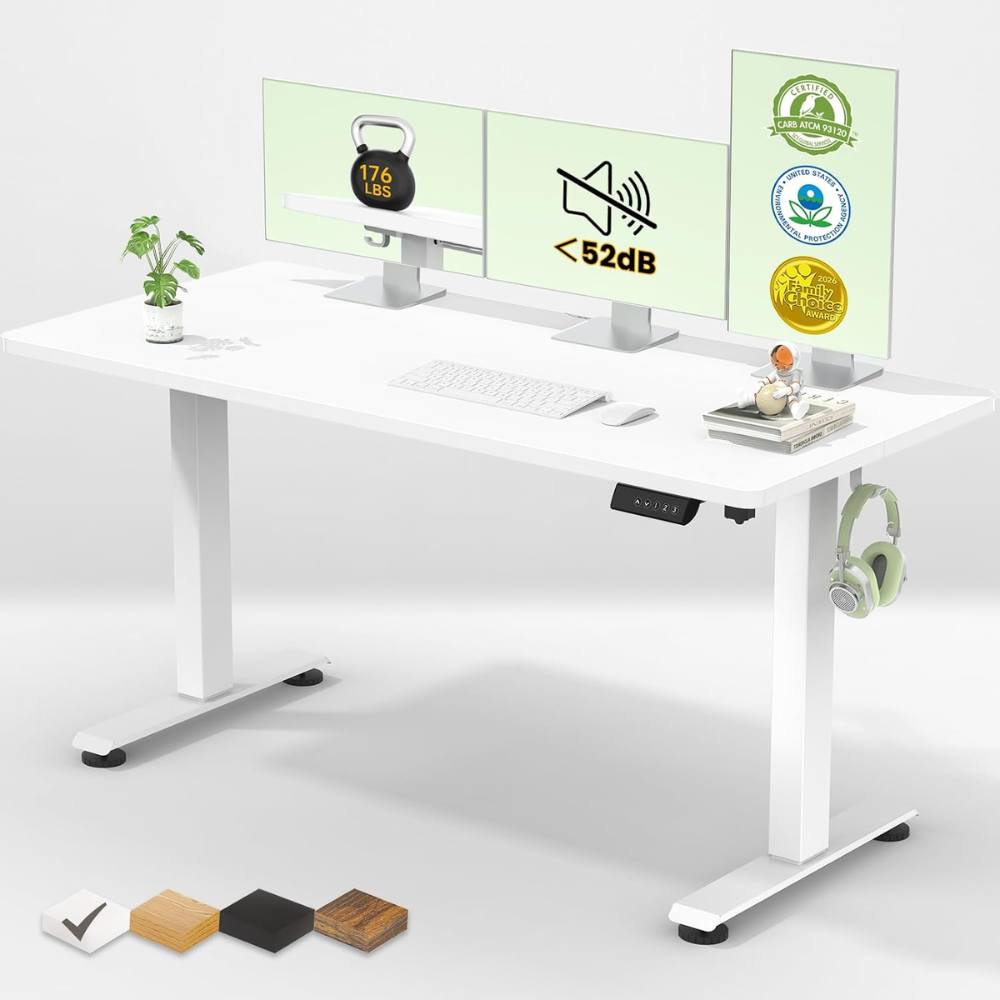
Veken Standing Desk
- A wide, budget friendly standing desk with an industrial frame, tidy cable management, and a laminate top that wipes clean.
At fifty five inches wide, this is the widest one buyers could find for such a competitive price, and the extra surface area helps once you add a monitor, keyboard, and a notepad without everything overlapping. The desktop splits into two panels during assembly, which sounds tricky, but the instructions are simple and clear once the frame is upright.
The laminate top wipes clean easily, which matters given how much coffee ends up near a keyboard by mid afternoon. Cable management stays tidy thanks to the included clip, and the two headphone hooks get used daily once people notice them. The industrial frame suits a room with exposed brick or black metal shelving nearby, and the motor runs quietly enough that co workers on a video call rarely notice it.
The Executive L Shaped Standing Desk
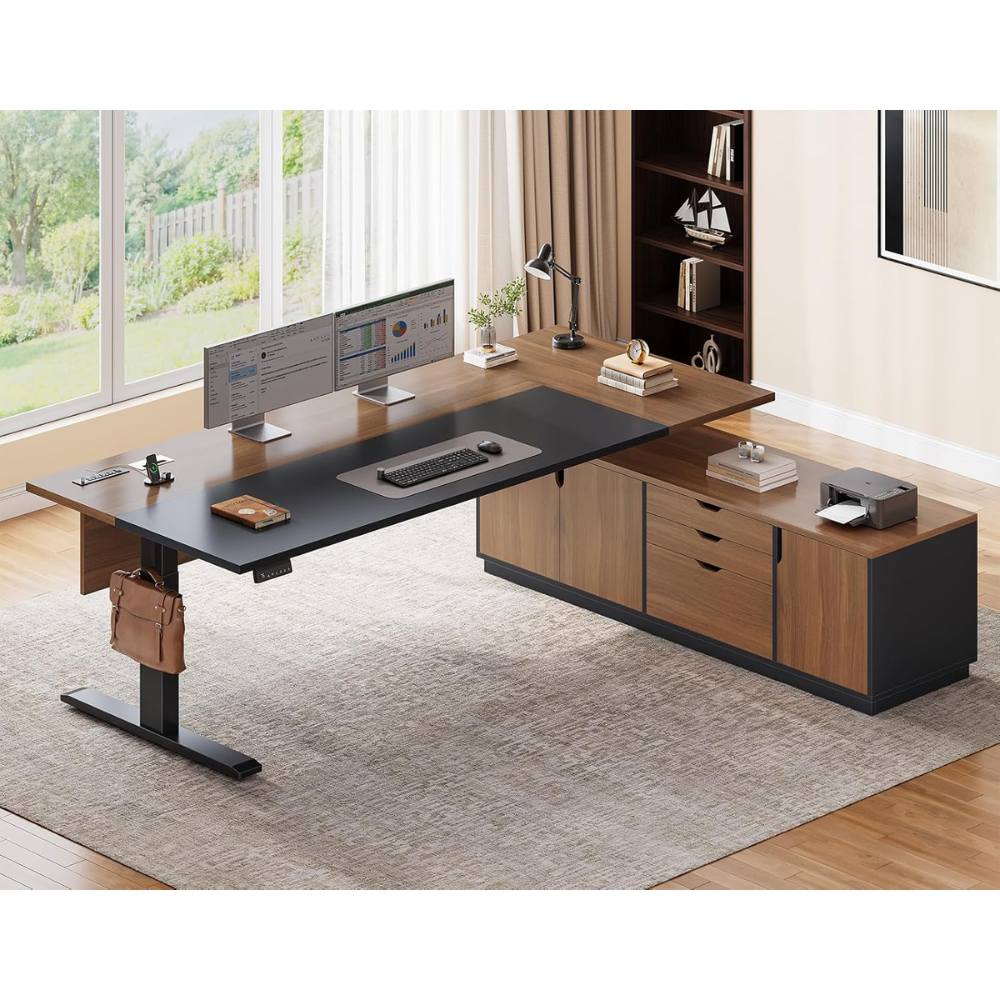
SEDETA L Shaped Electric Standing Desk
- A 71 inch L shaped executive desk with drawers, built in outlets, USB ports, and a quiet motor for offices.
This is the desk for anyone who wants a full executive setup without hiring someone to build it in. The L shaped top gives you room for a computer, keyboard, and even a tablet all at once, plus two storage drawers and a small cabinet for anything you would rather keep out of sight. Built in outlets and USB ports at the top are genuinely convenient, since reaching behind a desk for a charger gets old fast.
The frame runs under thirty decibels, quiet enough that the motor barely registers over normal conversation. The brown finish adds an anti slip texture with an instant layer of warmth that suits farmhouse or traditional rooms well. One honest note, the number pad looked a little dirty right out of the box, and rubbing alcohol did not fully clear it, though that never affected how the desk performed.
Frequently Asked Questions (FAQs)
How do I match desk decor to my style?
Start with the material and color already dominant in the room, then pick a desk that repeats at least one of those elements. A home office desk that matches home decor almost always shares a wood tone, a metal finish, or a color already present nearby.
What desk styles work well in a home?
Writing desks and L shaped desks tend to work in the widest range of rooms, since both come in enough finishes to match nearly any existing style already in place.
Are standing desks good for home offices?
They work pretty okay, especially for anyone who sits most of the day otherwise. They support better posture and give you the option to change position every hour or two.
Conclusion – A Few Final Words!
Picking the right home office desk comes down to measuring first, then matching material, color, and shape to a room you already know well. A desk that matches home decor is not about finding the trendiest option online. It is about choosing a piece that looks like it belongs, holds up to daily use, and still feels comfortable after a full workday. Whether you land on a simple writing desk, a wide industrial standing desk, or a full executive setup with drawers and outlets built in, the goal stays the same. Once you choose a home office desk with your actual room in mind, the whole space starts to feel finished instead of furnished in a hurry.
Affiliate Disclosure: This article may contain affiliate links, including links to Amazon. If you purchase through these links, we may earn a small commission at no additional cost to you.