

Maybe you have put off decluttering for months, maybe even years, and the prospect of getting started still feels heavier than the actual mess in the garage. Well, the day has finally arrived. Today, you are going to tackle it together, with your family, instead of trying to do it all alone after everyone else goes to bed.
How you can involve family in decluttering the house changes the whole project from a solo chore into something that actually gets finished. Along the way, it teaches everyone under your roof a little more respect for shared space.
Whether you have young kiddos underfoot, young adults with their own opinions about what stays, or an adult child who has recently moved back home with a few boxes nobody asked for, everyone in the house has a role to play. We all have to start somewhere, and these family decluttering tips will help you get moving without turning the weekend into a fight.
Table of Contents
How Family Participation Makes Things SO Much Easier
A national survey co-conducted by NAPO found that 54% of Americans feel overwhelmed by the amount of clutter in their lives, and 78% find it too complicated to deal with. Though, unlike dealing everything solely you could spread it out with the help of your kids’ involvement or your spouse.
Decluttering your home with family spreads the physical work across more hands, but it also spreads the decision making. Involve family in decluttering the house early, and one person is no longer stuck guessing what everyone else wants to keep.
Figuring out how to declutter as a family often comes down to communication more than elbow grease. Once it becomes part of the family routine, the whole process stops feeling like a special event. Kids who help decide what goes are also less likely to complain when their old toys actually leave the house for good.
Talk to Your Family Before You Start
Before you even touch a single box, sit down together. Figure out exactly what you want to get done and set a realistic deadline. Just saying ‘we need to clean the house’ never works. Check everyone’s schedule to make sure the plan actually fits into a real weekend.
Skipping this is exactly how a family project turns into a massive fight over who controls the living room. Taking just fifteen minutes to talk it out at dinner saves hours of screaming matches later.
Start Small Instead of Decluttering the Whole House
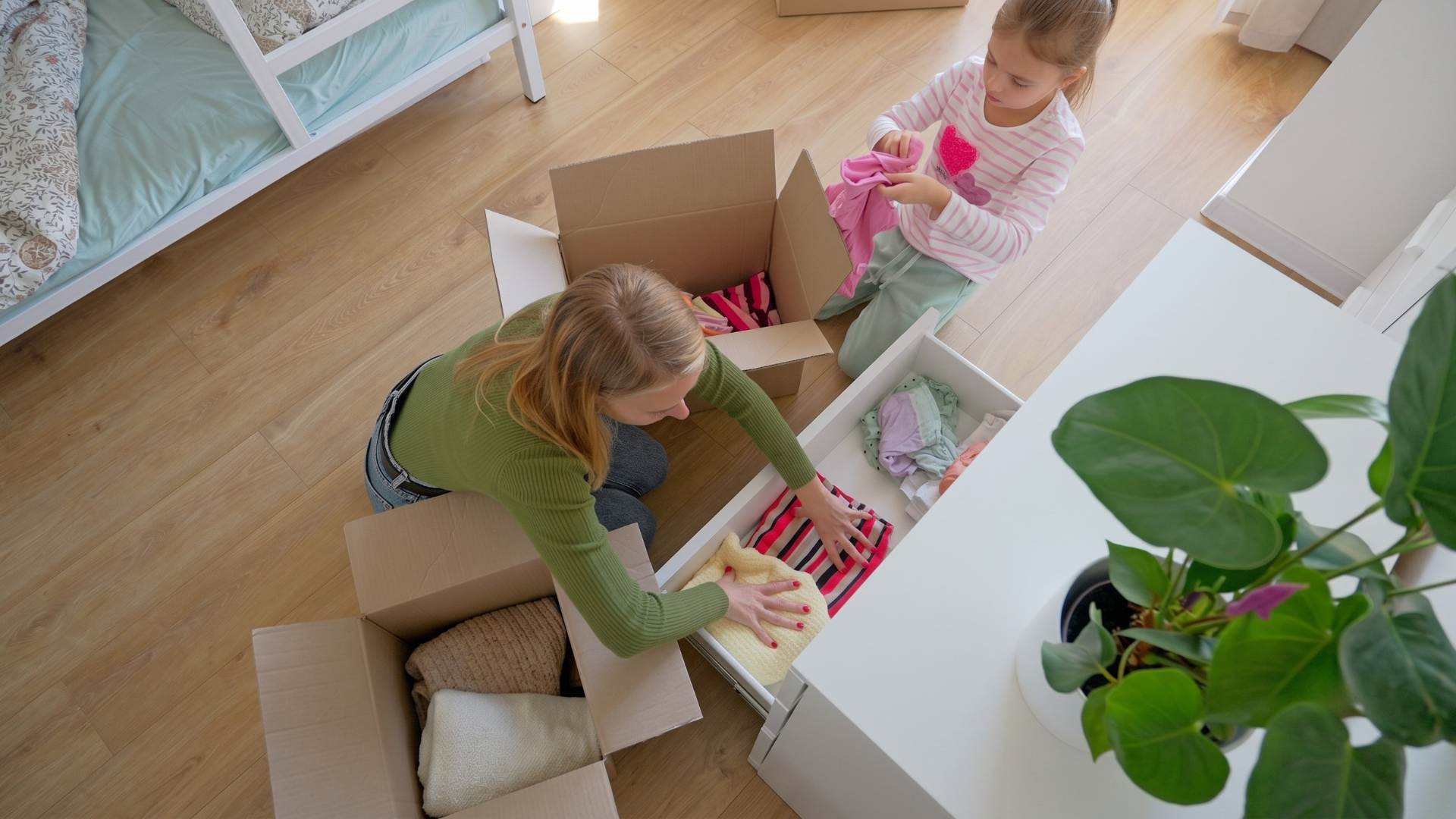
Trying to tackle the entire house in one weekend sounds efficient, though. You likely will not conquer it, and the burnout from trying usually kills momentum for weeks afterward. Pick one room, one closet, or even one drawer to kick things off.
Honestly, start small. Try tackling just one messy closet first. It’s a quick project you can actually finish in one sitting, and seeing it clean instantly feels amazing. Set a timer for 15 minutes and just see how much you can get done.
Knocking out a small win like this builds momentum way faster than burning yourself out on a massive weekend deep-clean. Plus, once that closet is done, the rest of the house doesn’t feel nearly as scary.
Give Every Family Member a Job
To keep your sanity, hand out specific jobs instead of leaving things up in the air. Otherwise, everyone assumes someone else is on it. Try splitting it up. One person sorts, another carries boxes, and someone else runs items to Goodwill. Keep tasks matched to age and attention span.
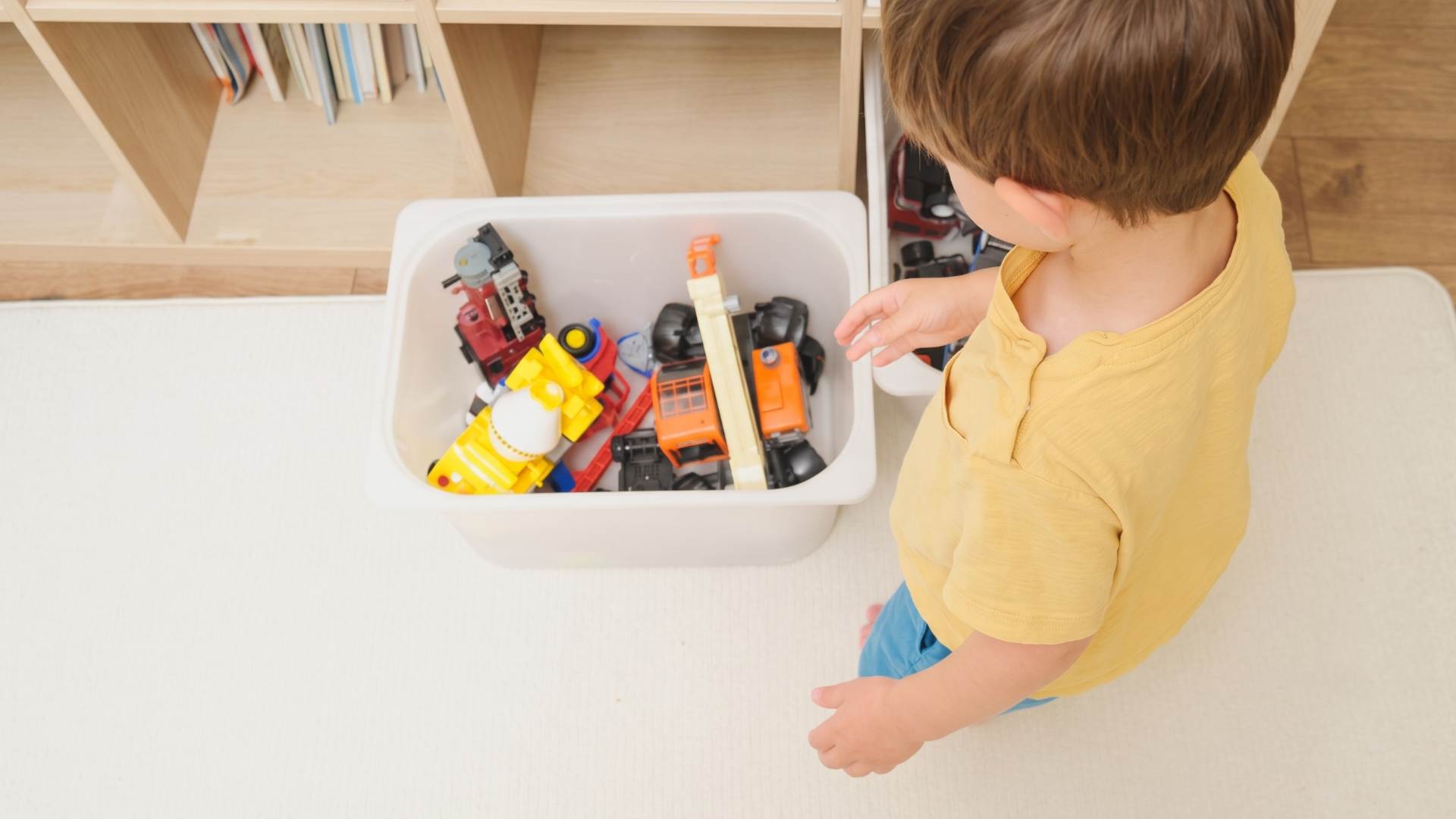
Little ones do great with their own toy bins because it’s a simple, straightforward task. Older kids or young adults can take on the heavy lifting or organize the garage. Treat it like doing the dishes after dinner, when everyone knows their part, the work gets done, and nobody ends up bitter about doing it all alone.
Make Decluttering Fun
Try to make the whole process fun rather than a drag. You can set a kitchen timer for fifteen minutes and see who can clear a single shelf before the alarm goes off. Blast some music, take a quick break for snacks between rooms, or let the kids own the donation box by decorating it themselves. A little bit of humor and a strict time limit will keep everyone moving instead of procrastinating. When it doesn’t feel like a forced command, people actually pitch in willingly.
Use the Keep, Donate, Recycle, Trash Method
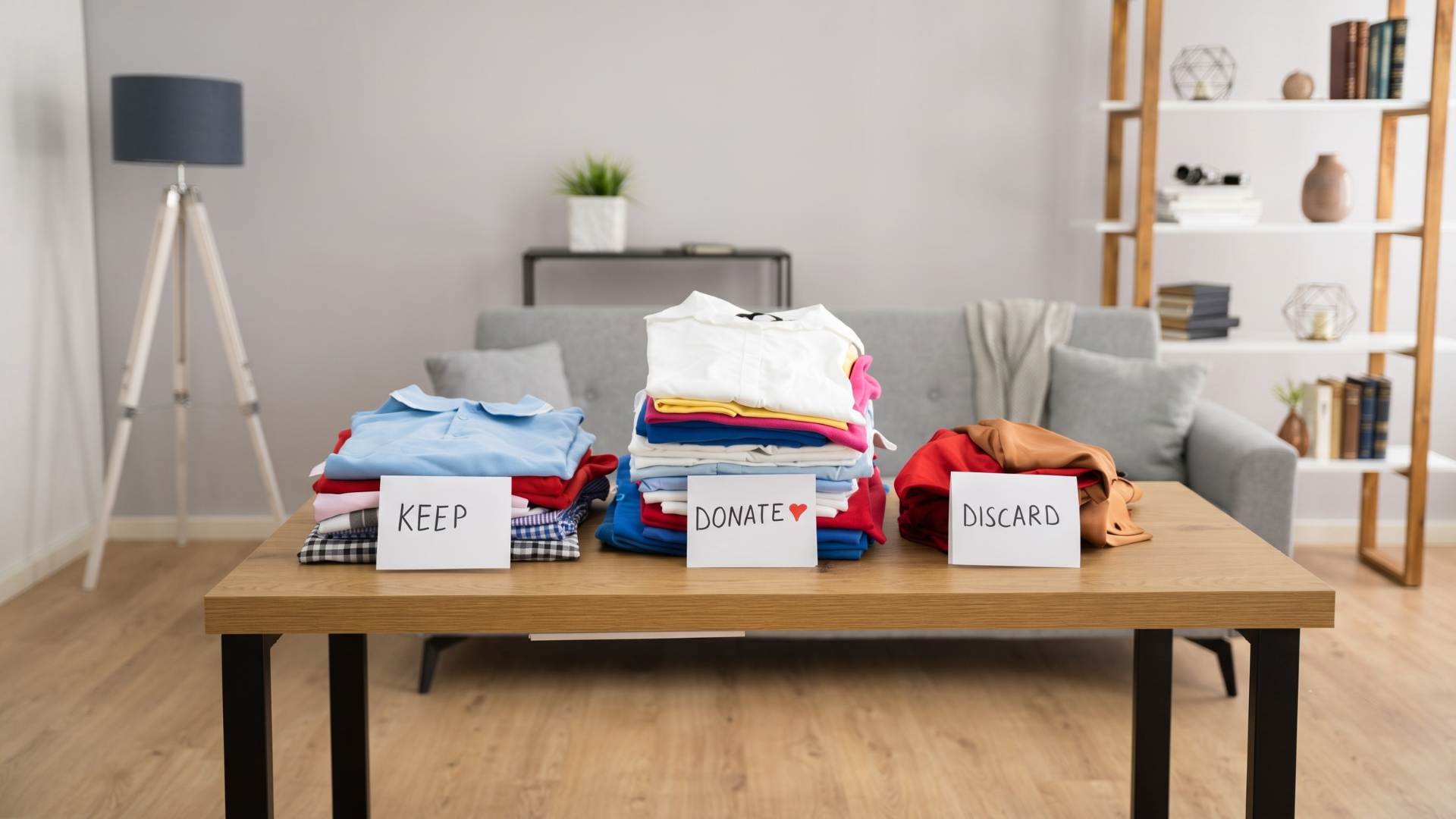
Grab four boxes and label them: keep, donate, recycle, and trash. This system works beautifully because it forces you to make a final choice on everything right then and there—no ‘maybe’ piles allowed. Walk through the room together, hold up an item, and call out where it goes. Once you get a rhythm going, it actually moves surprisingly fast. Plus, it keeps everyone honest so nobody can just shove things into a corner to deal with later.
Let Everyone Decide Their Own Belongings
Let’s be honest: nobody wants someone else choosing what to do with their stuff, and forcing that fight always backfires. Let everyone make the final call on their own things, whether it’s an old t-shirt or random knick-knacks hidden in a drawer. This is huge for kids, too. If we want them to respect their belongings, we have to let them choose what actually matters to them. No secretly throwing away toys while they’re at school. The same goes for the adults in the house. Just because you live together doesn’t mean you own each other’s things.
Create Simple Household Decluttering Rules
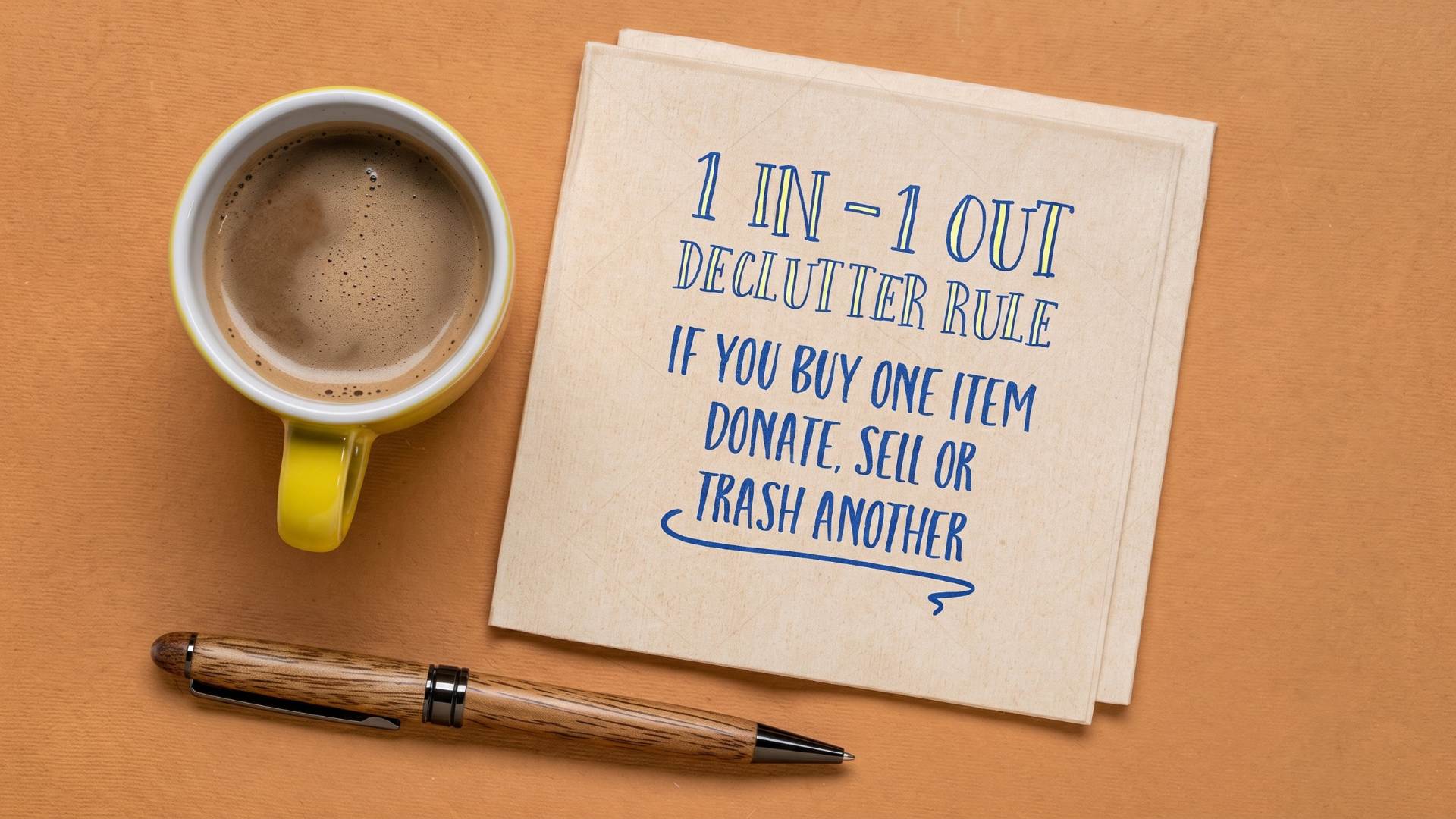
A few clear rules keep the whole project from sliding backward within a month. One in, one out for new toys or clothes. A designated spot and a simple storage system for donation items so they do not sit in a hallway for weeks.
A five minute tidying routine before bed each night folds naturally into an existing family cleaning routine without adding extra work. Whatever rules you land on, write them down somewhere visible, and stick to it as a family instead of letting the system quietly fade after the first busy week.
If someone slips, they can be called out kindly, not as a punishment, just a reminder that the effort only works if everyone stays on board. Rules also give kids a clear sense of what is expected, which tends to cut down on the daily nagging that wears everyone out faster than the mess itself does.
Celebrate Progress Together
Notice the wins, even small ones. An empty junk drawer, a garage floor you can actually see, a closet that closes without anyone leaning on the door. Celebrating progress keeps motivation to declutter high, especially with kids who respond well to visible proof that their effort mattered. Nothing helps motivate family to declutter quite like seeing real, visible results after a single afternoon of work.
Order pizza after a big donation run, or just take a photo of the before and after to look back on later. That way, the whole family associates organizing your home together with a genuine sense of accomplishment instead of another task nobody wanted to do in the first place, and lasting family home organization ends up feeling like a shared win instead of a chore checked off a list.
Frequently Asked Questions (FAQs)
How to Involve Your Kids with Decluttering
Give them ownership over their own space first. Kids engage more when they get to decide what stays, instead of being told what to throw away. Letting a child hold up an item and choose keep, donate, or trash teaches responsibility far faster than a parent quietly clearing a room while they are at school.
How often should families declutter together?
A quick fifteen minute tidy most evenings, plus a bigger decluttering challenge once a month, keeps clutter from building back up between sessions. Families who involve family in decluttering the house on a regular schedule rarely face the same overwhelming pile twice.
What is the easiest room to start decluttering?
A single junk drawer or a bathroom cabinet usually works best. Both are small, low pressure spaces that build confidence before tackling a full room.
Wrapping Up…
Involve family in decluttering the house, and the whole project stops feeling like a burden one person has to carry alone. Start small, assign clear jobs, and let everyone have a say in their own belongings, and the process starts building momentum on its own. Decluttering your home with family will not happen perfectly on the first try, and that is fine. We all have to start somewhere, and a clutter free home usually comes from small, daily habits instead of one heroic weekend. These home organization tips work best when you organize rooms one at a time, since a tidy home built gradually tends to stay that way far longer than one cleaned in a single rushed sprint. Pick one drawer this week and see how far the momentum carries you from there.