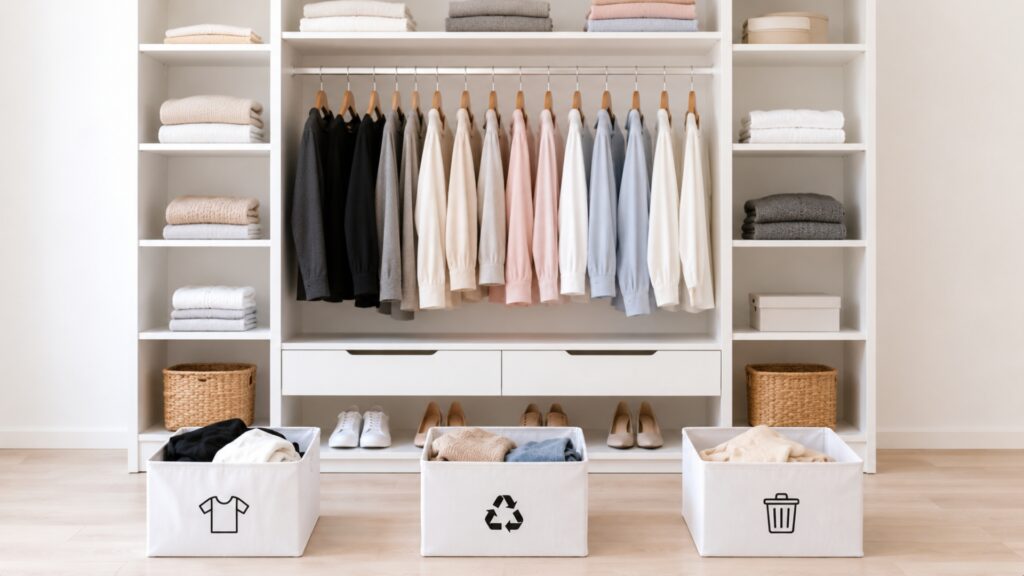

There’s a moment most people know pretty well. You look around, and your living room has somehow become a storage unit. The countertops are buried, the closets are packed, and you feel stuck before you’ve even started.
If you can relate, you’re not alone. Millions of Americans deal with this exact feeling every single year, and most of them never take the first step because the whole thing feels too big. This guide walks you through 10 gentle steps to declutter your home, without burning out or losing your mind in the process.
Before You Begin, Change the Way You Think About Decluttering
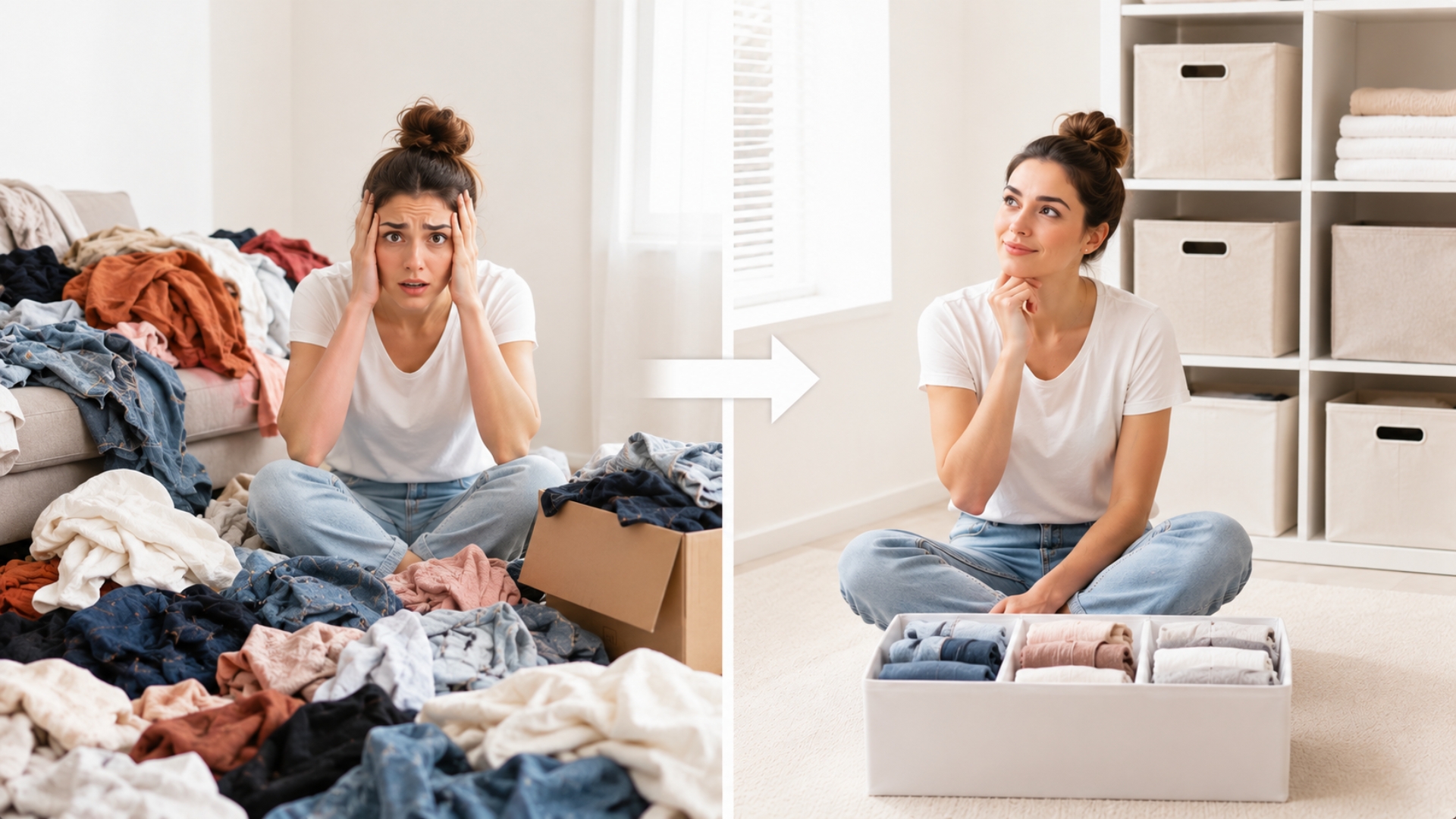
Here’s the real problem with how most people approach a home declutter. They go in full throttle. They pull everything out of every drawer, scatter it across the floor, and then stand there frozen with no plan. I know, I know. The only way out is through, but that doesn’t mean you have to push through at all costs.
If I had approached my clutter with an all-or-nothing, let’s get this done overnight attitude, I am sure I’d still be surrounded by piles of stuff. Wearing yourself out in the process only adds to the stress and overwhelm. The goal is not to finish in a weekend. The goal is to make steady, consistent progress that actually lasts.
One thing that never gets talked about enough is mental clutter. Before you touch a single drawer, get clear on why you want to declutter your home in the first place. Is it stress relief? More breathing room? A clean environment that helps you think? When you know your reason, it becomes your anchor when things get hard.
A lot of people also ask how to declutter your home questions like, “What if I need it someday?” or “But it was expensive.” These thoughts are completely normal. The key is to stop letting them make decisions for you.
10 Practical Ways to Declutter Your Home Without Feeling Overwhelmed
1. Start With One Small Area
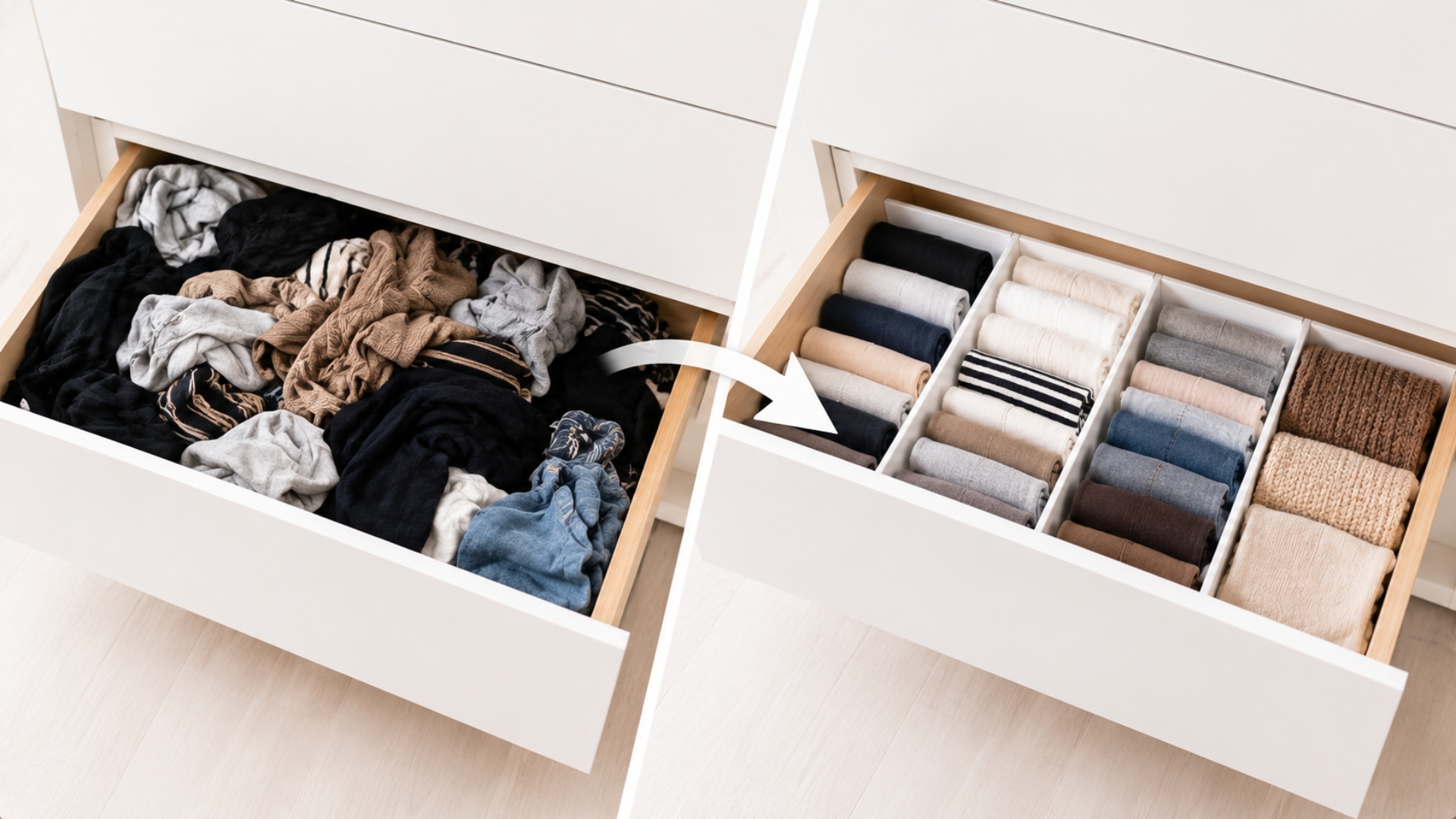
What about where to start? That is the question that stops most people cold. The answer is always the same. Start smaller than you think you should.
Don’t start with the garage. Don’t start with the master bedroom. Start with one shelf. One drawer. One corner. Small steps produce real momentum, and momentum is what keeps you going.
Figuring out how to declutter your home without getting completely overwhelmed and stressed out comes down to this exact principle. The first win matters more than the size of the win.
2. Set a 15-Minute Timer
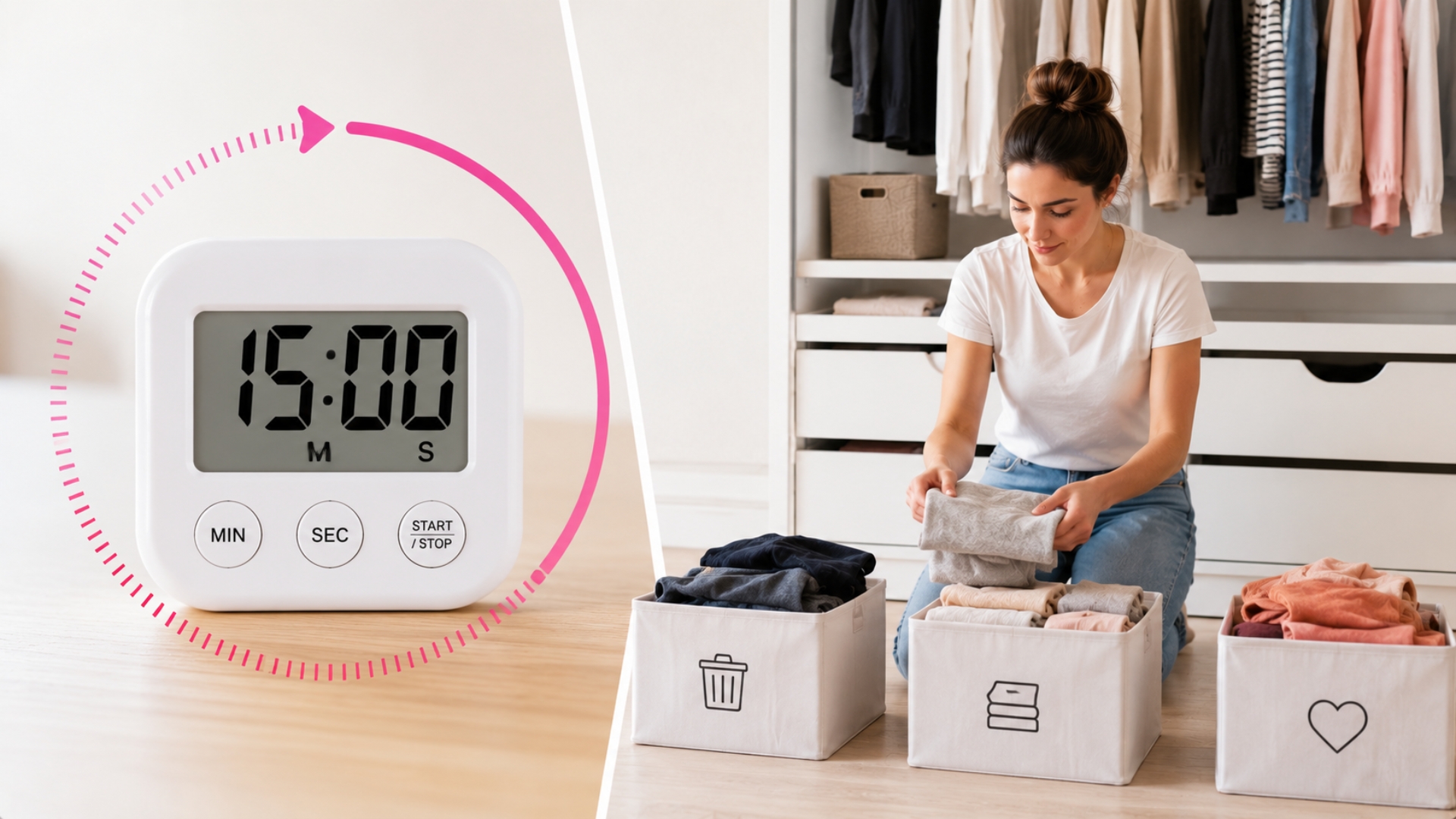
You don’t need a full Saturday to make progress. Set a timer for 15 minutes and work only until it goes off. That’s it. No guilt if you stop there.
This is one of the most underrated home decluttering tips around. Short, focused sessions beat exhausting marathons every single time. Your brain stays sharp, your decisions stay good, and you don’t wake up the next day dreading the whole process.
3. Focus on Visible Clutter First
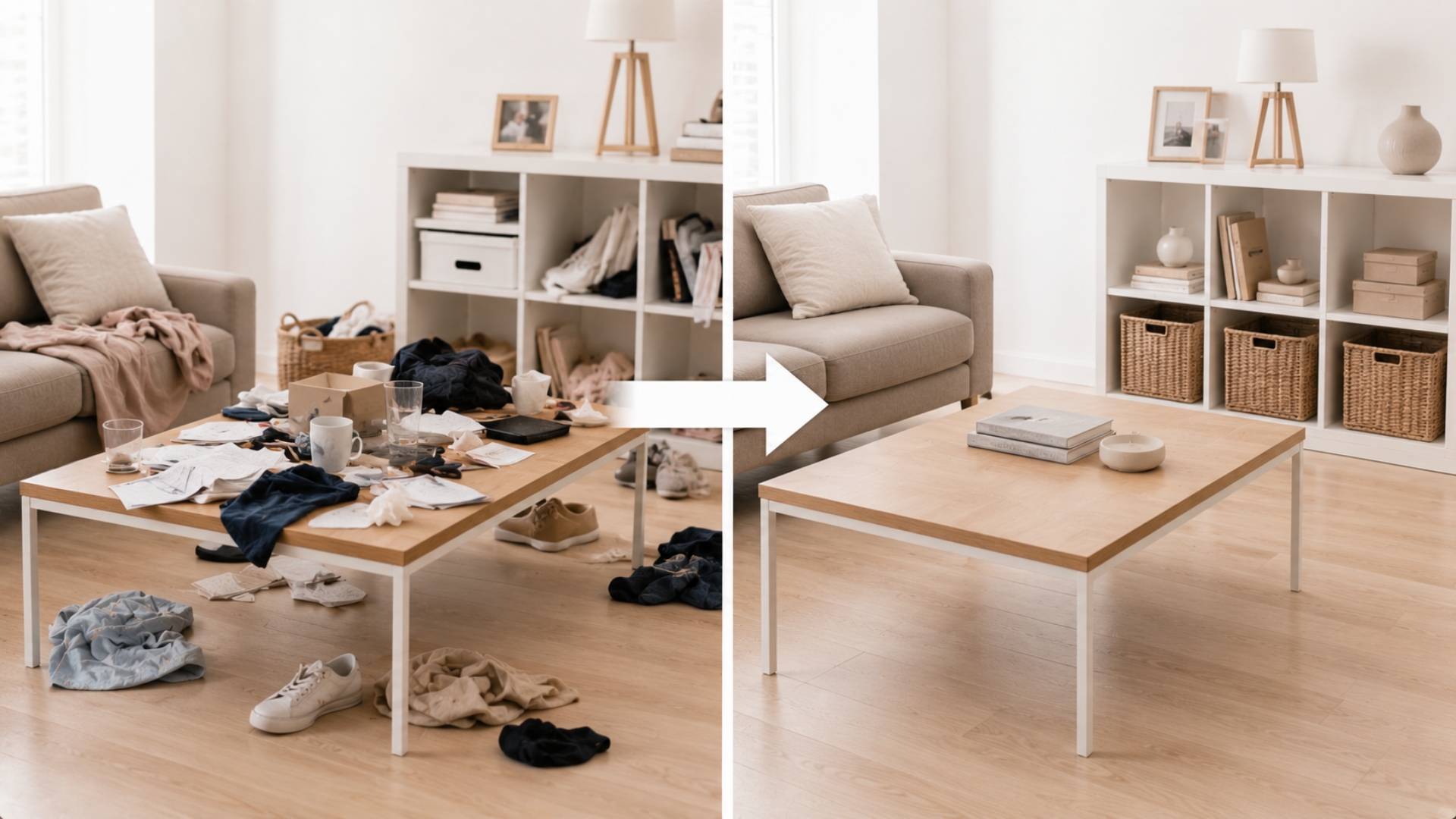
Before you go deep into cabinets and closets, clear what you can see. Surfaces, countertops, tables, the floor. A clean environment that’s visible gives you an instant sense of progress and makes the rest of the work feel more manageable.
An organized home doesn’t have to be a perfect one. It just has to feel like a place where you can breathe again.
4. Use the Keep, Donate, Toss Method

This is the backbone of any solid decluttering checklist. Every single item gets placed into one of three piles: keep, donate, or toss. No “maybe” pile allowed. The maybe pile is where progress goes to die.
Ask yourself three questions about each item. Do you use it? Do you love it? Does it serve a real purpose in your life right now? If the answer is no across the board, it belongs in one of the two exit piles.
5. Stop Asking “What Should I Throw Away?”
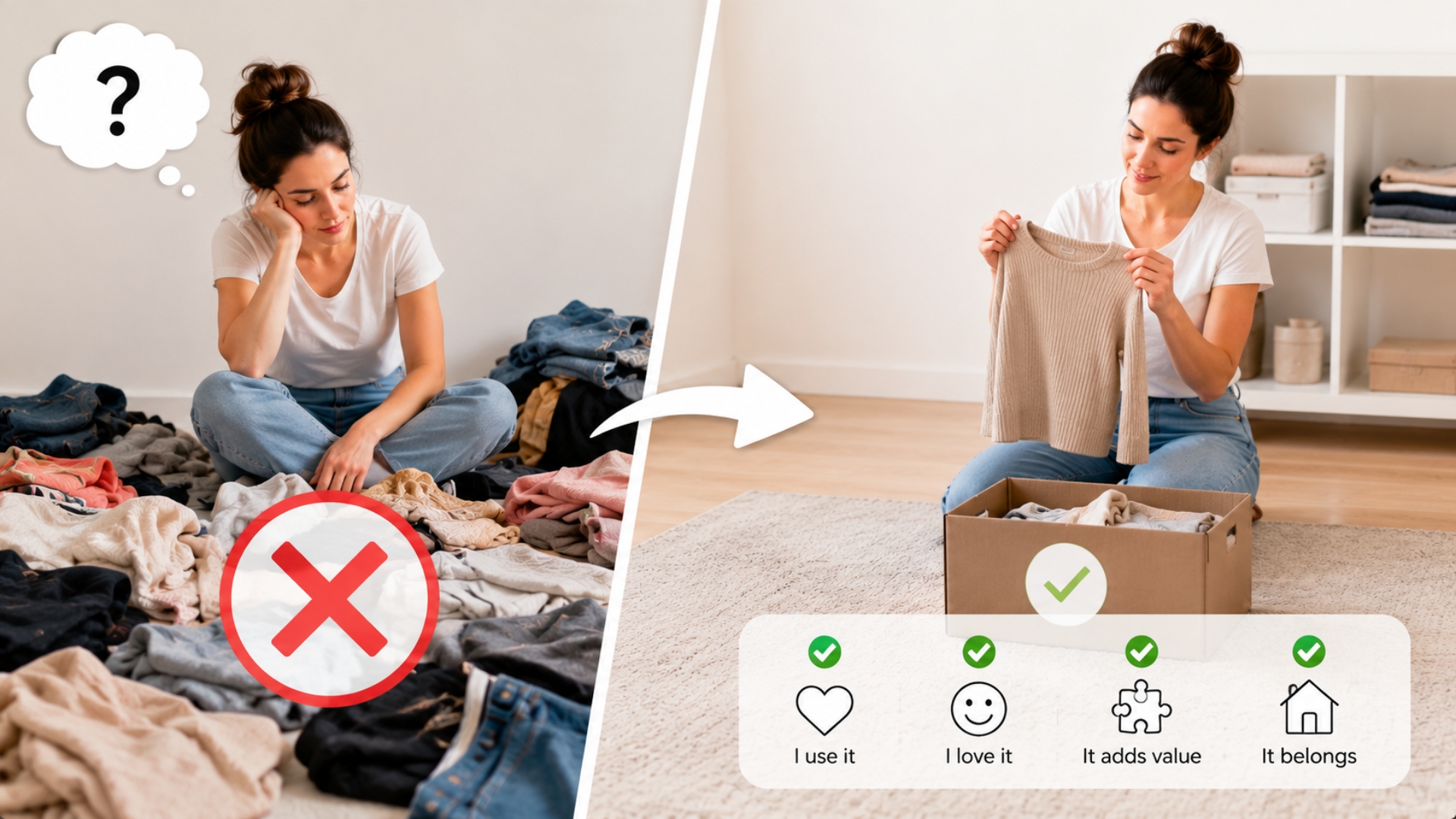
Flip the question entirely. Instead of asking what to throw away, ask what actually deserves a spot in your home. This shift changes everything.
When you frame it that way, the items that stay have to earn their place. The rest just quietly exit. This is at the core of how to get rid of clutter in a way that feels intentional instead of punishing.
6. Let Go of Guilt Attached to Items

This one is big. People hold onto household items they never use because of who gave it to them, what it cost, or where they bought it. The guilt is real, but it’s also one of the biggest blockers when you’re trying to simplify your home.
Here’s the truth. The memory lives in you, not in the object. If you never use it, don’t know how to use it, or can’t even identify what it is, say goodbye. That gift from your aunt, that gadget you bought in 2018, that sweater still in the bag. Let it go. You won’t miss any of it.
7. Declutter One Category at a Time
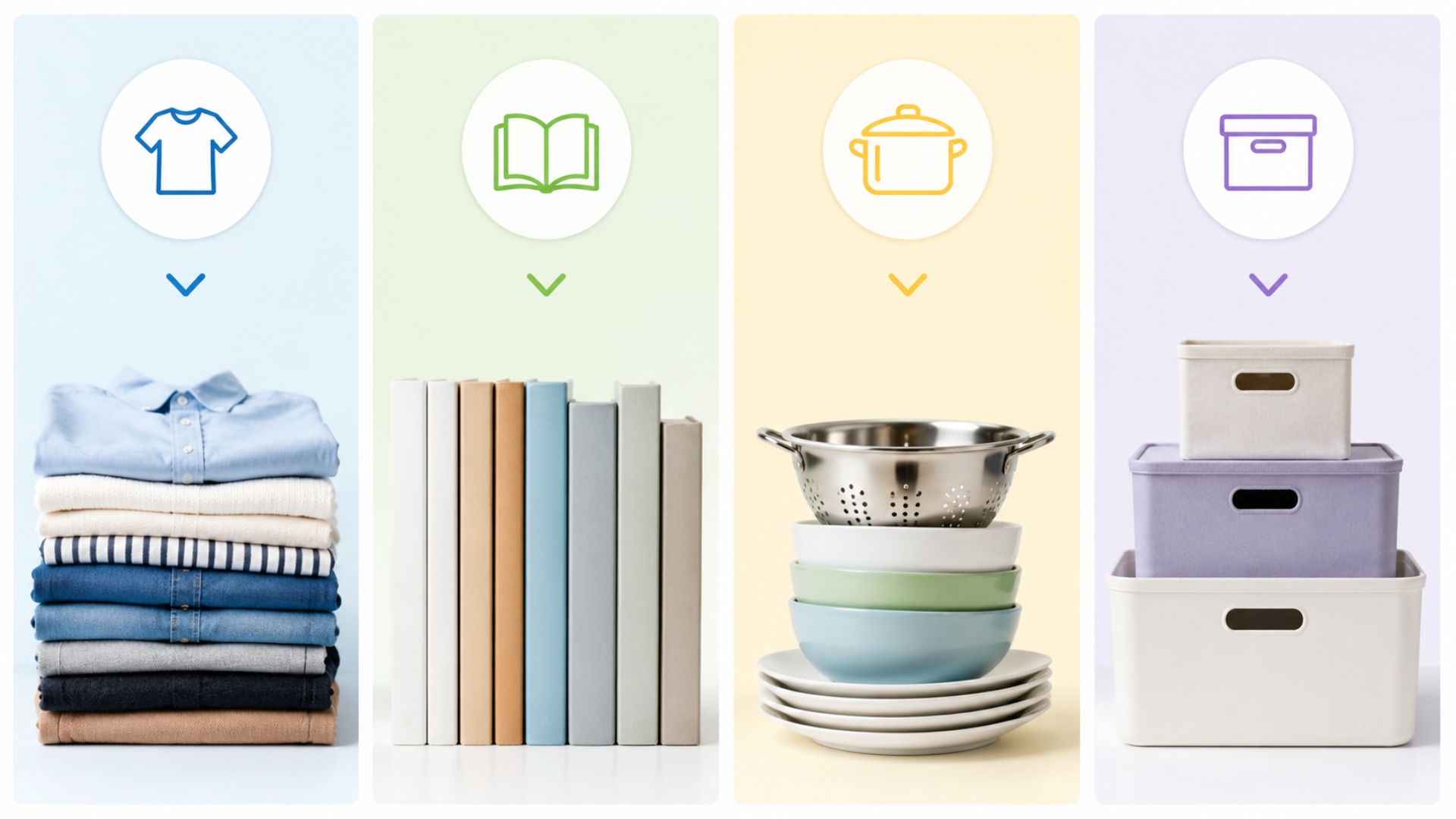
Organizing your home gets a lot less overwhelming when you work by category instead of by room. Clothes one day. Books another. Kitchen gadgets the next.
This approach, made famous by Marie Kondo and backed by organizing professionals everywhere, works because it forces you to see everything you own in a single category all at once. It’s hard to justify four corkscrews or seven black t-shirts when they’re all laid out in front of you.
A 2010 UCLA study found that women perceiving their homes as cluttered exhibited flatter cortisol slopes, indicating chronic stress. The research, published in Personality and Social Psychology Bulletin, suggests a link between home environment perception and physiological stress patterns. The case for a home declutter is not just organizational. It’s physical.
8. Avoid Buying New Storage Too Soon
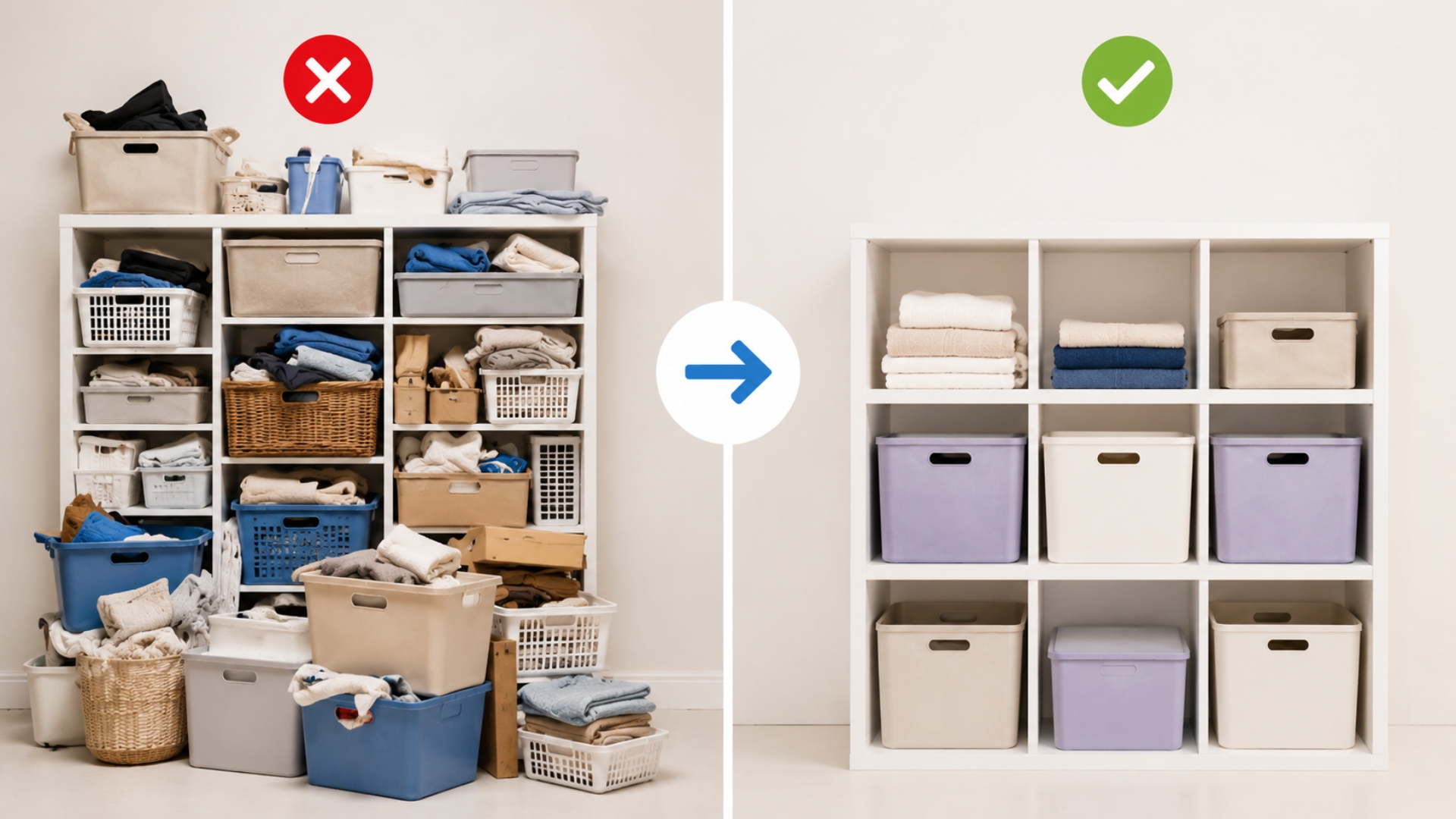
This is one of the most common mistakes people make. They buy bins, baskets, and shelving units before they’ve actually done the work of decluttering. Storage solutions are not the answer to clutter. They’re just a way of organizing your clutter more neatly.
A real decluttering for beginners approach means getting rid of things first, then figuring out what storage you actually need. You’ll almost always need less than you thought.
9. Create a Donation Box

Put a box somewhere visible, a corner of a room, the garage, near the front door. Any time you come across something you no longer need, drop it in. When the box fills up, take it in.
This turns decluttering into a daily habit instead of a major event. It keeps the momentum alive between bigger sessions. It also takes the pressure off any single session because you know there’s always another chance to let something go.
According to the National Association of Productivity and Organizing Professionals, people who build daily habits around tidying and letting go of items are far more likely to maintain a clutter free home long term than people who rely on one-time purges.
10. Build a Maintenance Routine
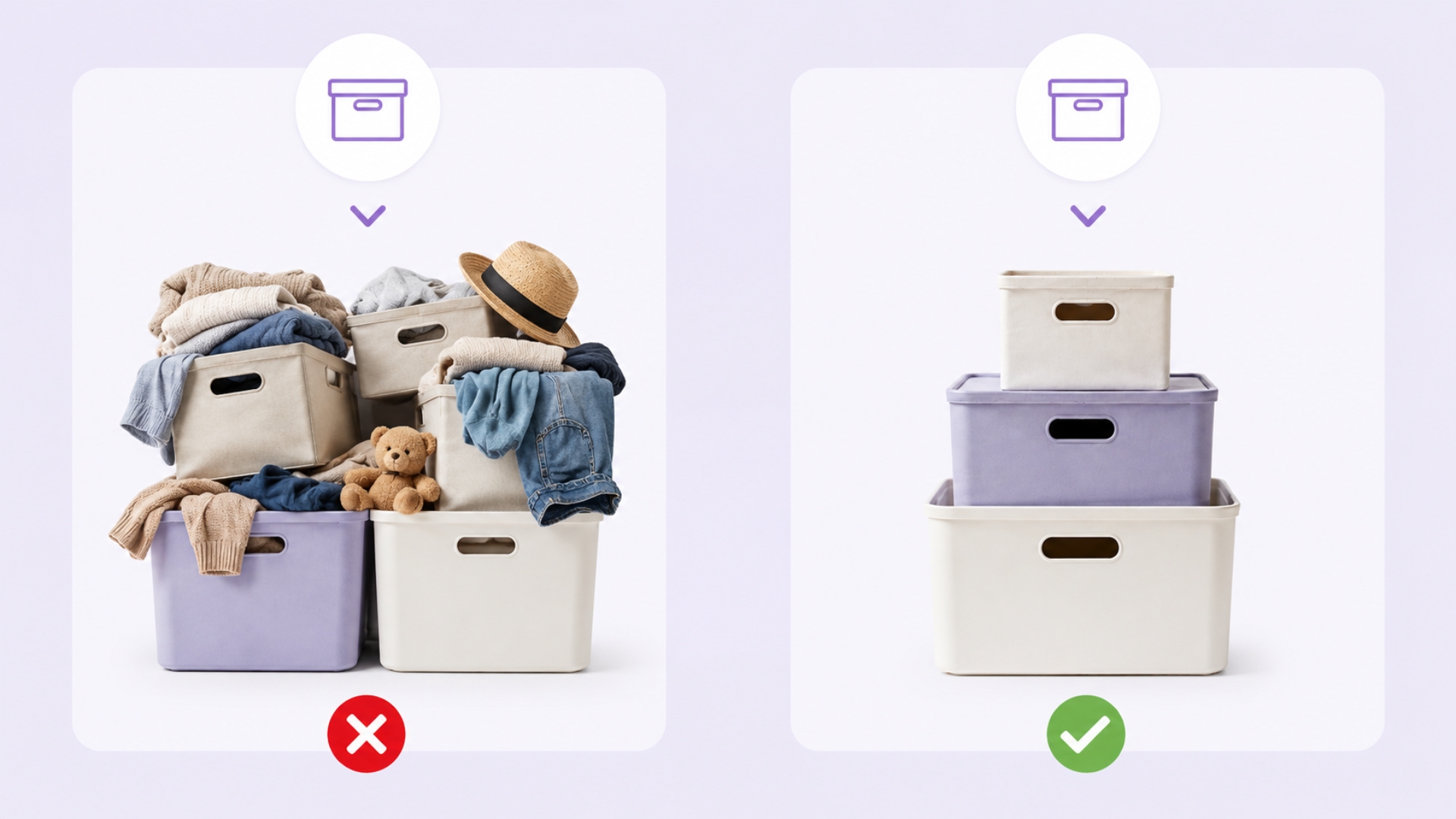
Getting clear is only half the battle. Staying clear is the other half. This is where daily habits save everything you’ve worked for.
A five-minute sweep each night. A rule that says one item in, one item out. A monthly check on a single area of the house. These small routines are what separate people who successfully declutter your home from those who are right back where they started six months later.
You don’t need a dramatic overhaul every year. You need a quiet, steady system that keeps the clutter from creeping back in.
Wrapping Up…
Here’s what it all comes down to. Knowing how to declutter your home is less about strategy and more about permission. Permission to start small. Permission to take your time. Permission to let things go without justifying it to anyone.
I just needed somewhere simple to start. I needed tiny tasks. Not a masterplan, not an entire weekend blocked off, just one drawer, one shelf, one small corner that I could actually finish. That’s where real progress begins.
A clutter free home is not a destination you arrive at and then you’re done. It’s something you tend to, the way you’d tend to anything worth keeping. Start where you are. Use what you have. And give yourself the grace to make it a process rather than a performance.