
Back in 2018, when I was a teenager, my family lived in a two-bedroom house. My parents had one room, and all three of us siblings shared the other. We had one cabinet between us, split into sections so each person had their own space. At the time it seemed completely normal, mostly because my mom was strict about cleanliness and organization, so the room stayed neat regardless of how many people were living in it.
We managed that setup for nearly three years before we rebuilt the house, and looking back, it taught me something that a lot of people only figure out after years of struggling with clutter: organization has nothing to do with how much space you have.
When I moved to university and lived in a hostel room with two roommates, three beds, one big shared cabinet, a table, and a dedicated corner for shoes and personal stuff, the same principle held. It was actually a decent-sized room split between three people, and keeping it functional came down entirely to how deliberately we organized what we had.
It seems like a lot of you are dealing with small spaces too. So here are the home organization ideas that genuinely work in compact living situations based on my own personal experience (lol) and aren’t just those idealized room makeovers.
Table of Contents
12 Best Home Organization Ideas for Small Spaces
1. Declutter Before You Organize
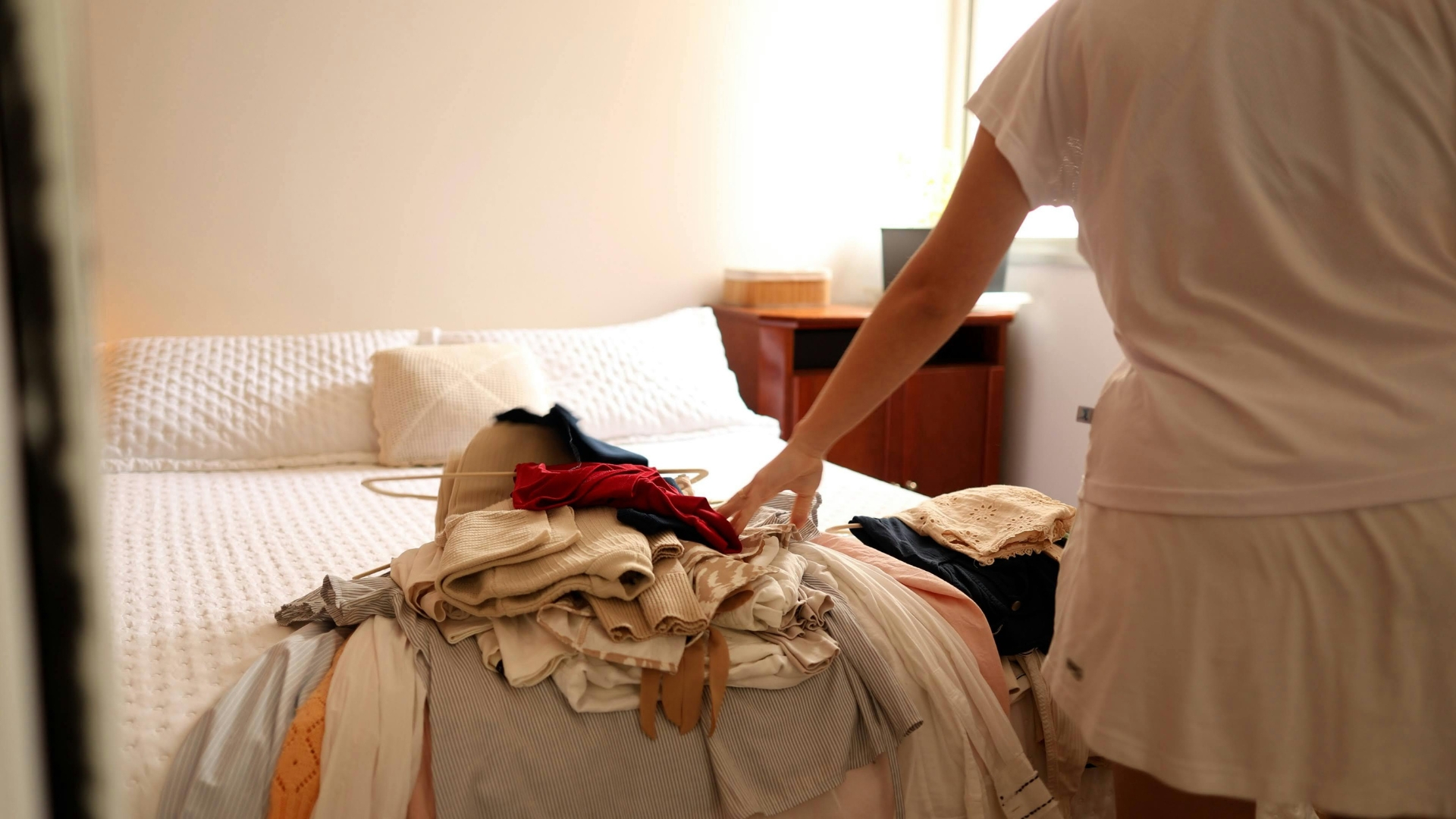
Every list of home organization ideas starts here, and it starts here for good reason. You cannot organize clutter. You can only rearrange it. Before any storage solution gets purchased or any shelf gets installed, go through every room and take out everything that does not serve a current purpose in your actual life.
I know letting things go is harder than it sounds. There is always the “but what if I need this someday” thought that makes you hold onto things that have been sitting unused for two years. At some point though, wanting a calm and uncluttered home matters more than keeping random items around on the off chance they might be useful eventually. And you know what? Once you let them go, you almost never think about them again.
A 2011 study from Princeton University found that visual clutter competes with our brain’s ability to pay attention and tires out our cognitive functions over time. Decluttering small spaces before organizing them is not just aesthetically useful. It produces a measurable reduction in mental load.
2. Use Vertical Space Instead of Floor Space
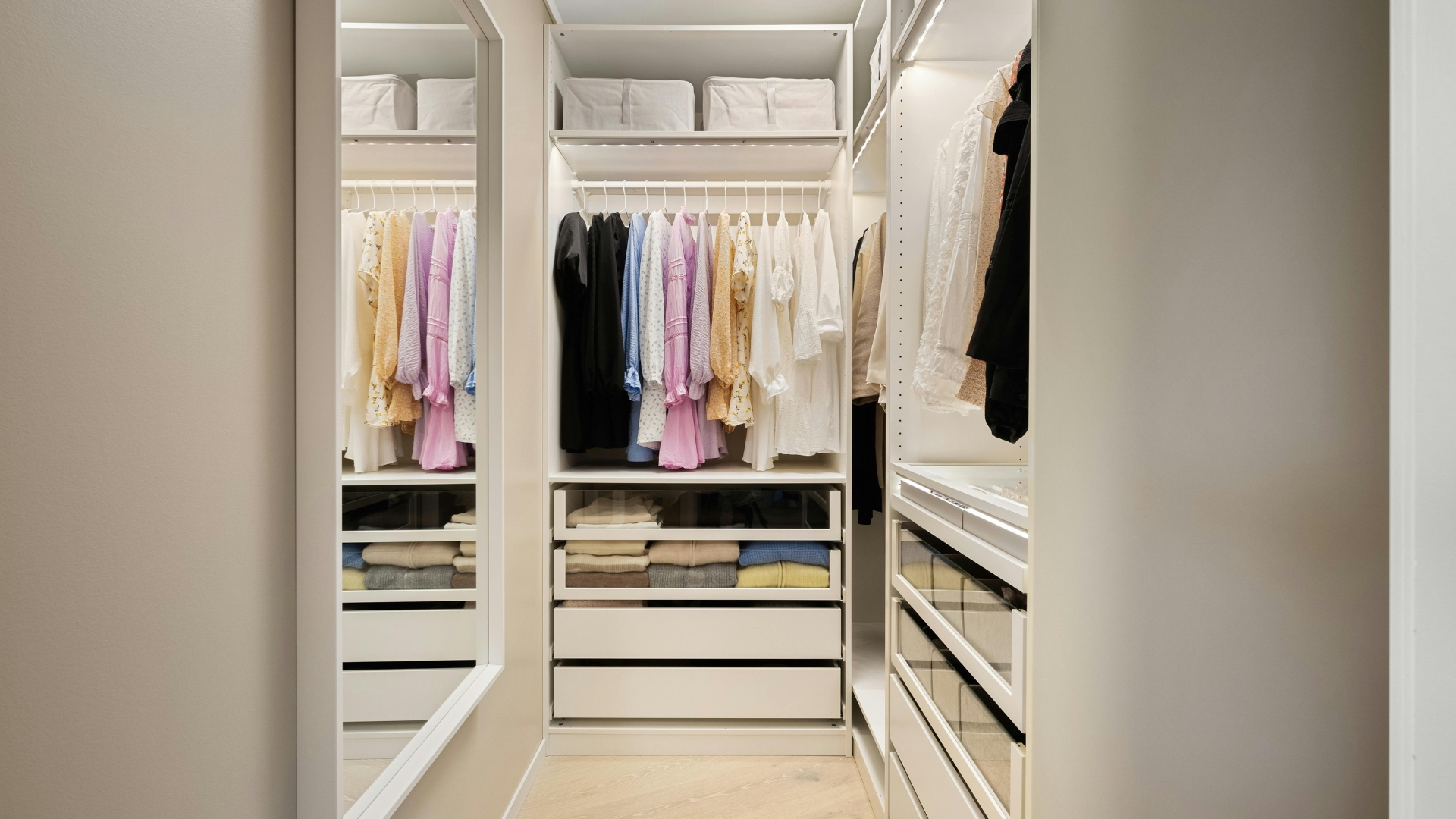
Floor space in a small home is the most finite resource you have, and treating the walls as empty surfaces is one of the most common wasted opportunities in compact living. Vertical storage shifts the organizational work upward and leaves the floor clear, which makes any room feel larger and more functional simultaneously.
Tall bookshelves, stacked storage units, and wall-mounted racks all pull items off the floor and onto the walls where space is almost always available. In a room shared between three people, we kept shoes on a rack that ran up the wall rather than across the floor, which freed up a surprising amount of walkable space without requiring anything more complicated than a basic shoe tower.
3. Add Storage Under Beds and Furniture
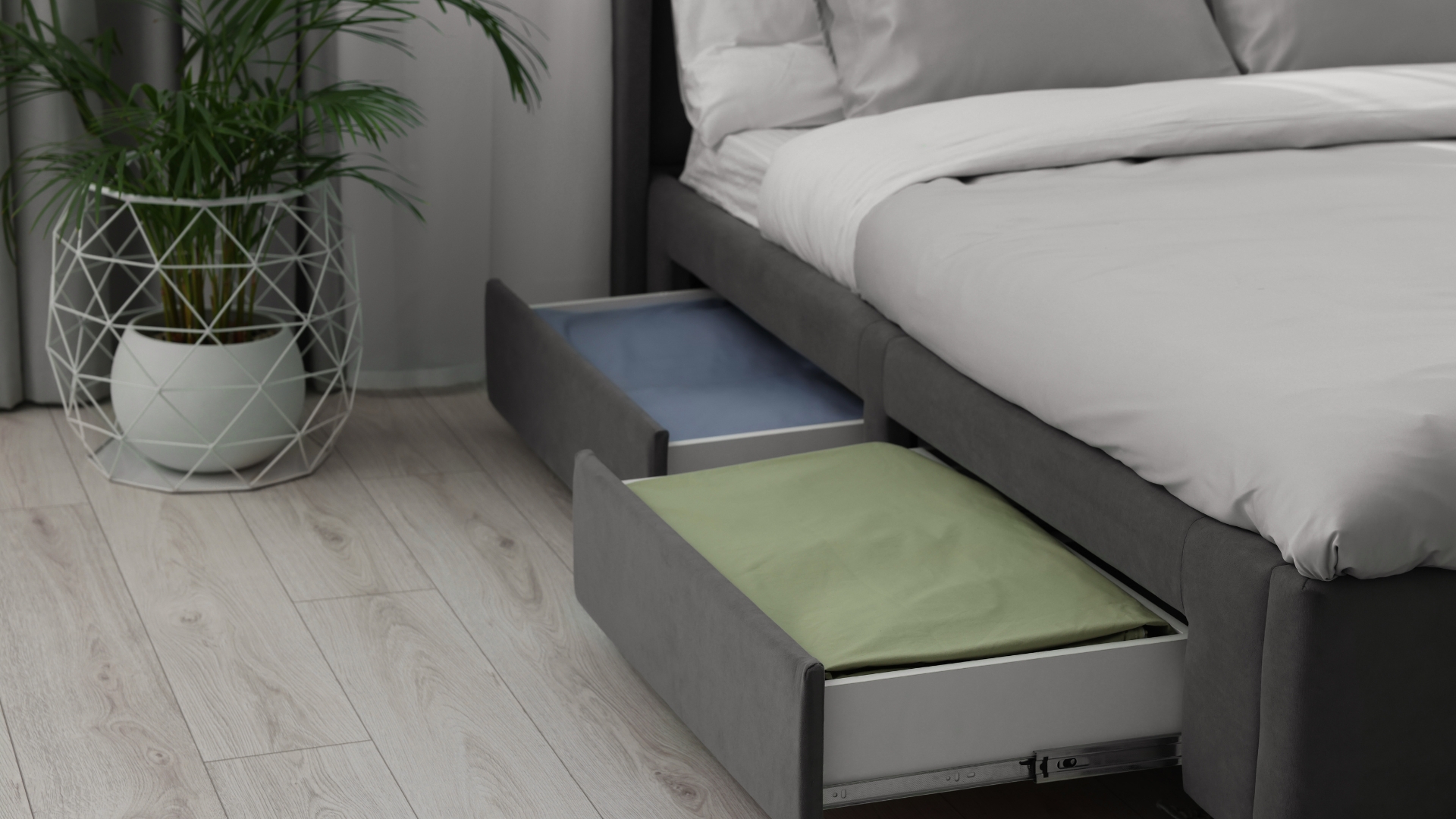
The space under a bed is one of the most consistently underused storage opportunities in any home. Low-profile storage bins, vacuum-sealed bags for seasonal clothing and bedding, and rolling drawers all fit under most standard bed frames and effectively double the storage capacity of a bedroom without taking up any additional floor space.
This is one of the most practical home organization ideas for small spaces because the hidden storage is completely out of sight and does not contribute to a sense of visual clutter in the room.
4. Choose Furniture That Serves More Than One Purpose
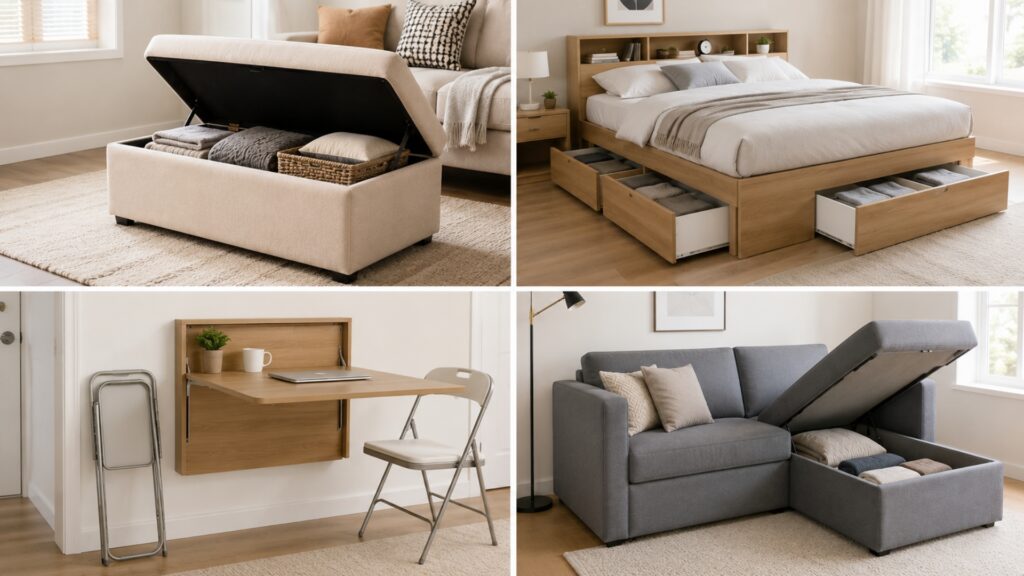
Multifunctional furniture is the single most impactful category of investment for anyone trying to maximize small spaces. An ottoman with internal storage handles seating, footrest duty, and holds extra blankets or seasonal items inside. A bed frame with built-in drawers takes out the need for a separate dresser.
A dining table that folds against the wall when not in use reclaims significant living area across the portions of the day when meals are not happening. Every piece of furniture in a small home should ideally serve at least two purposes. If it only does one thing, it needs to earn that footprint by being genuinely indispensable.
5. Use Baskets and Bins to Group Similar Items
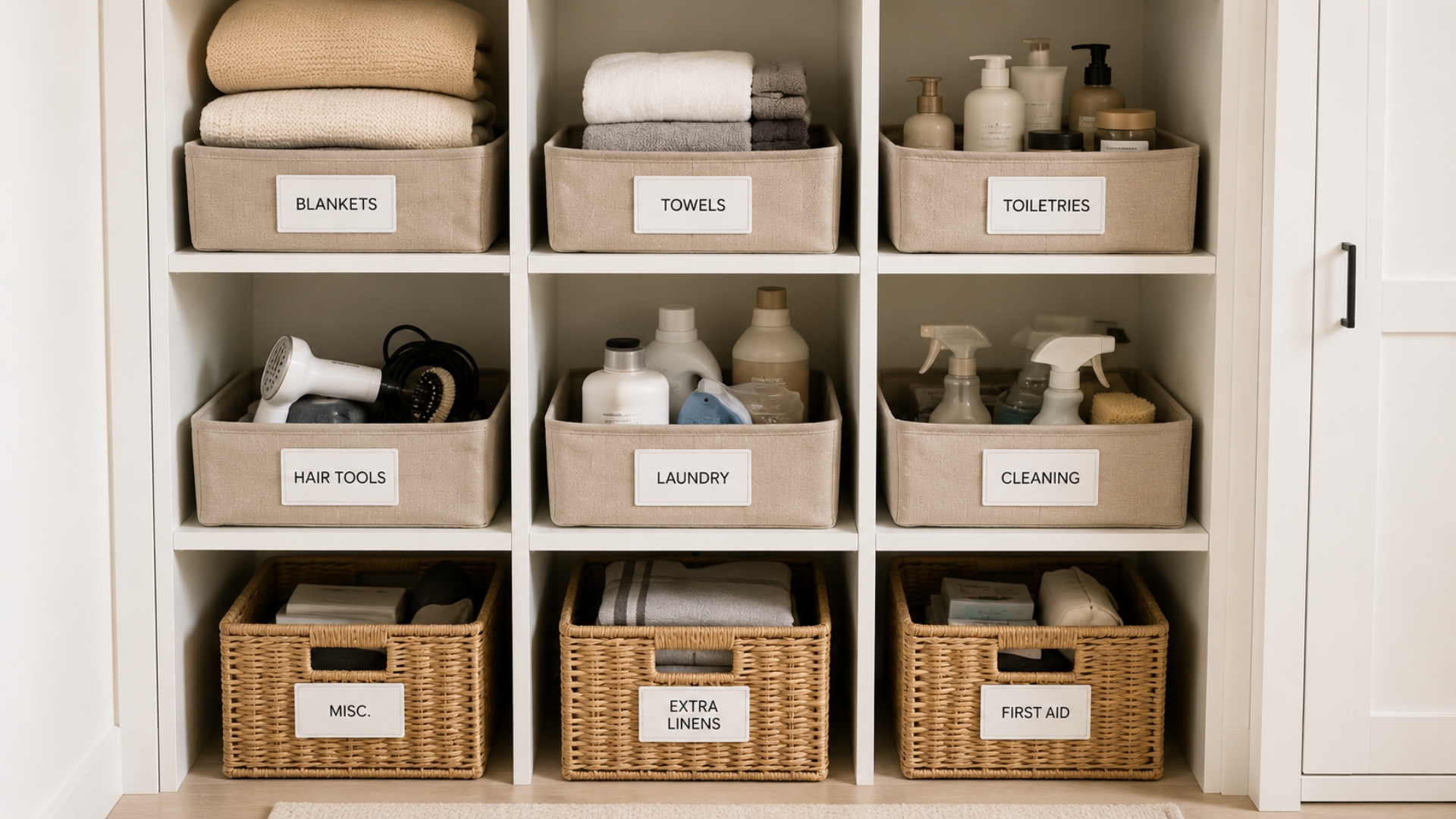
Storage baskets and bins are home organization ideas that look better than they sound. The practical function is grouping similar items into defined containers so that finding things is fast and putting things away is equally fast. The visual function is containing the natural visual noise of everyday objects into tidy units that the eye reads as organized.
Label every basket. The labeling step feels optional and then immediately reveals itself as necessary the second someone else in the household tries to find something.
6. Make the Most of Closet Space
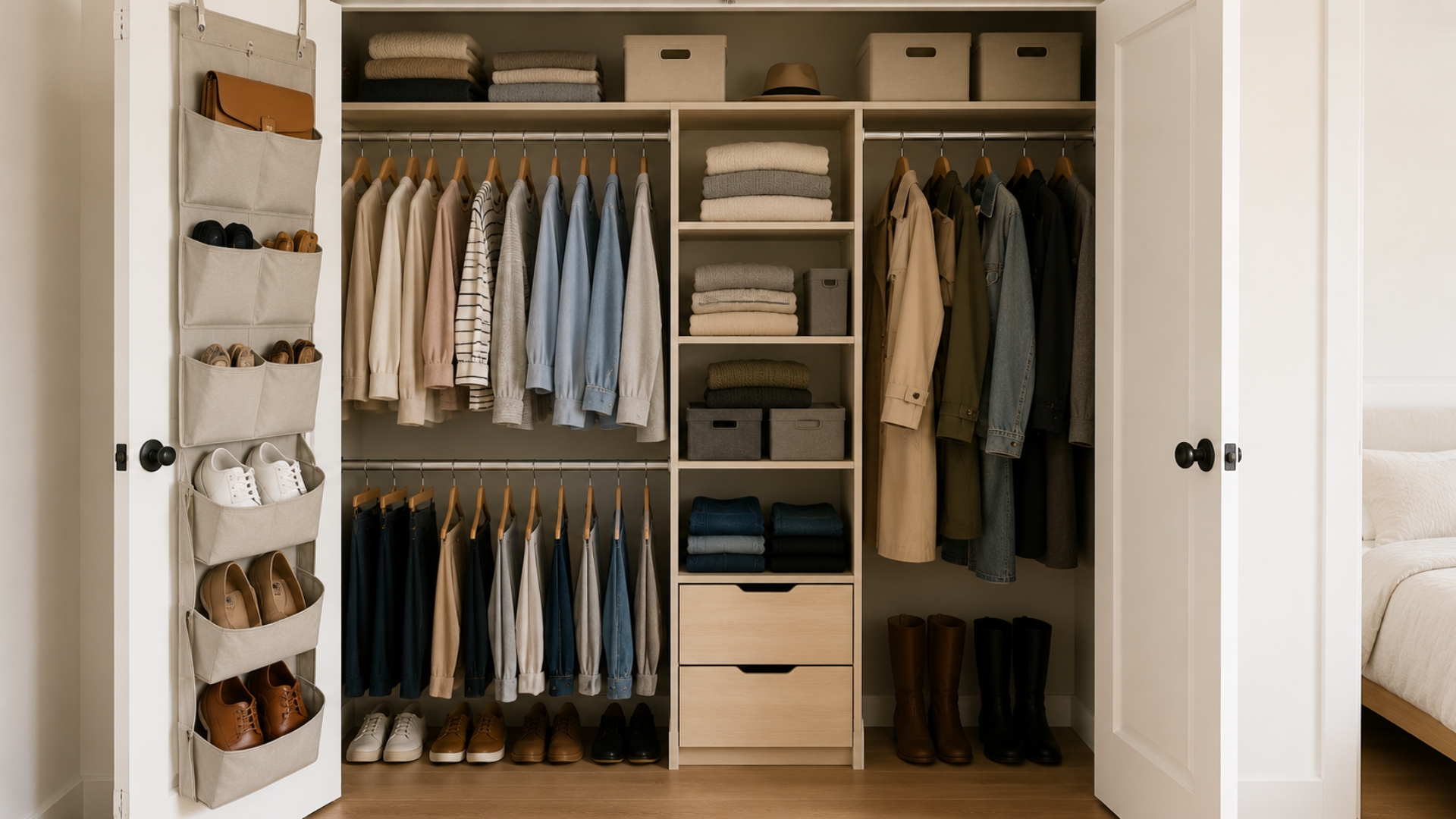
Most closets are organized. Turns out, they are using maybe half of their actual storage potential. Adding a second hanging rod below the first doubles hanging capacity for short items like shirts and jackets. Over-door organizers on the inside of the closet door add shoe storage, accessory storage, or cleaning supply storage without taking up any shelf or floor space inside the closet itself. Shelf dividers keep folded items from collapsing into each other.
The cabinet my siblings and I shared worked because each of us had a clearly defined section with everything folded and stacked rather than shoved in. That discipline is what kept three people’s belongings in one cabinet without it becoming chaos.
7. Install Wall Shelves Where Possible
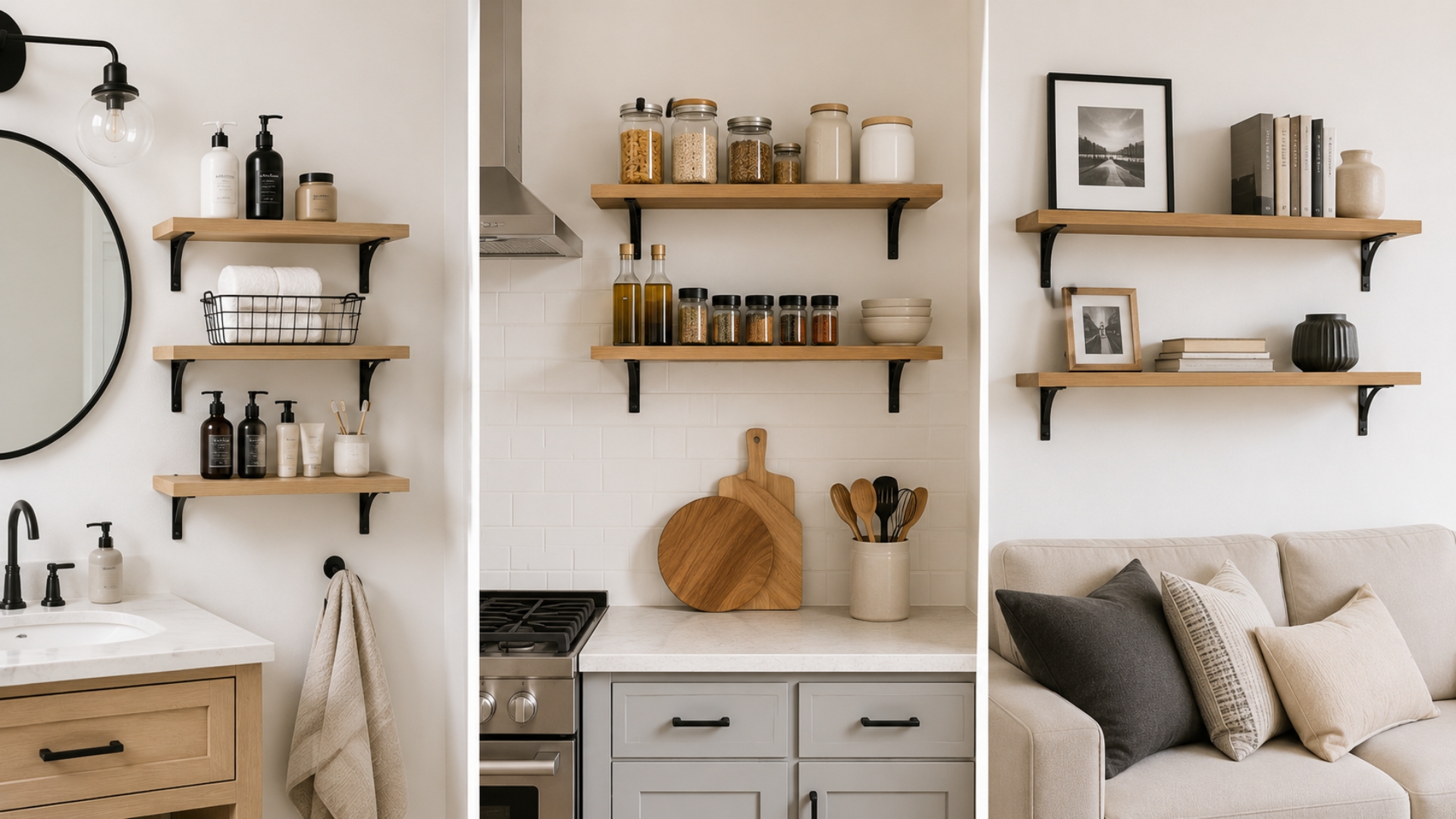
Wall shelves serve double duty as both storage and visual interest, and they are one of the fastest ways to add usable surface area to a room without touching the floor plan. Floating shelves in a bathroom hold toiletries off the counter. Kitchen wall shelves hold spices, oils, and everyday items that would otherwise fill cabinet space.
Living area wall shelves hold books, plants, and decorative objects that would otherwise sit on furniture surfaces. Home organization ideas for small spaces that add function without adding footprint are almost always the right direction, and wall shelves are the clearest example of that principle.
8. Use Door Space for Extra Storage
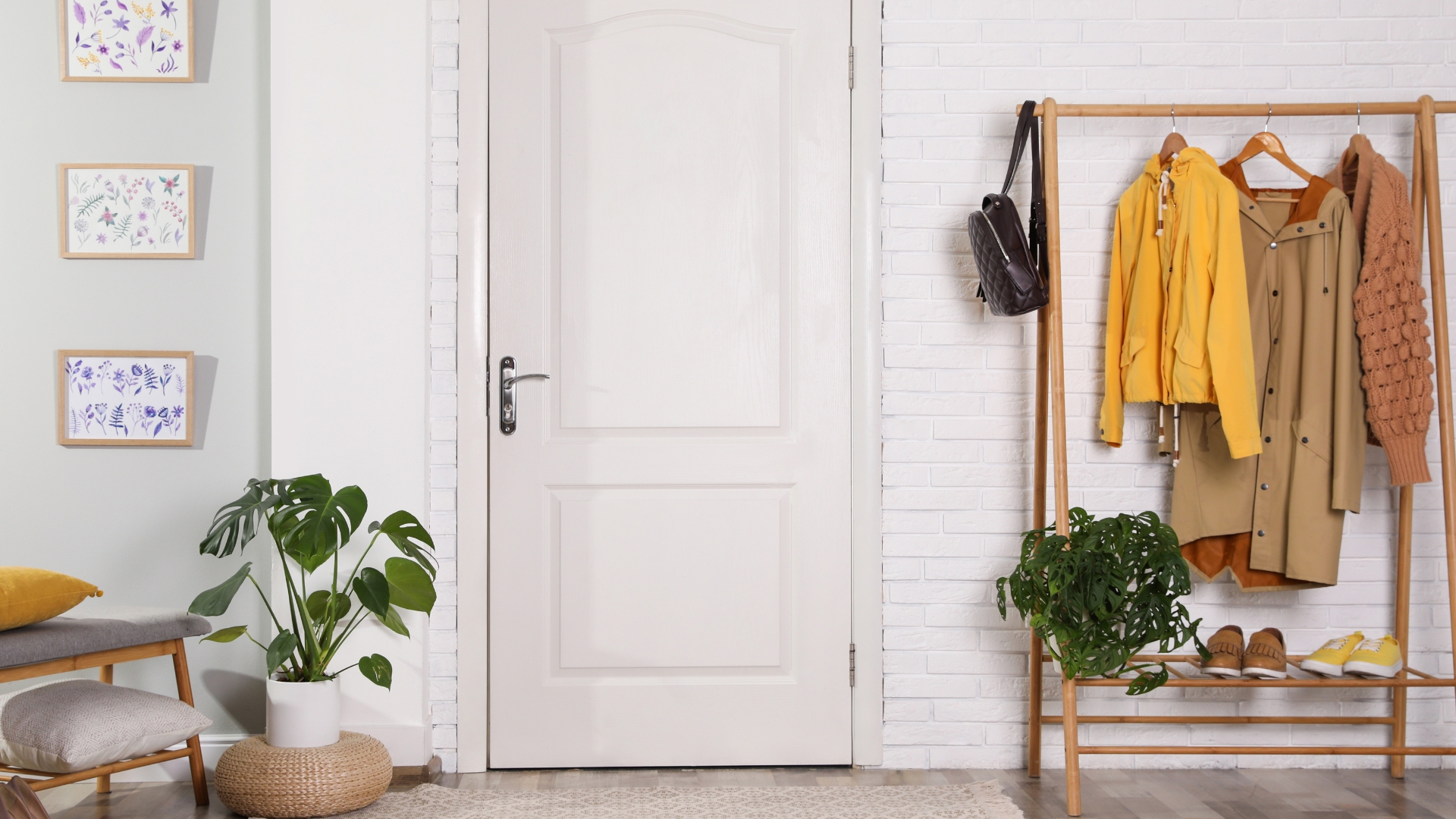
The backs of doors are extra storage that most homes never use. An over-door organizer on the pantry door holds canned goods and dry ingredients. A hook rack on the back of a bathroom door holds towels and robes. A shoe organizer on the back of a bedroom door holds more than just shoes. Every door in the house is a potential storage surface that costs no floor space and requires only a basic over-door hook or bracket to activate.
9. Create Dedicated Zones for Everyday Items
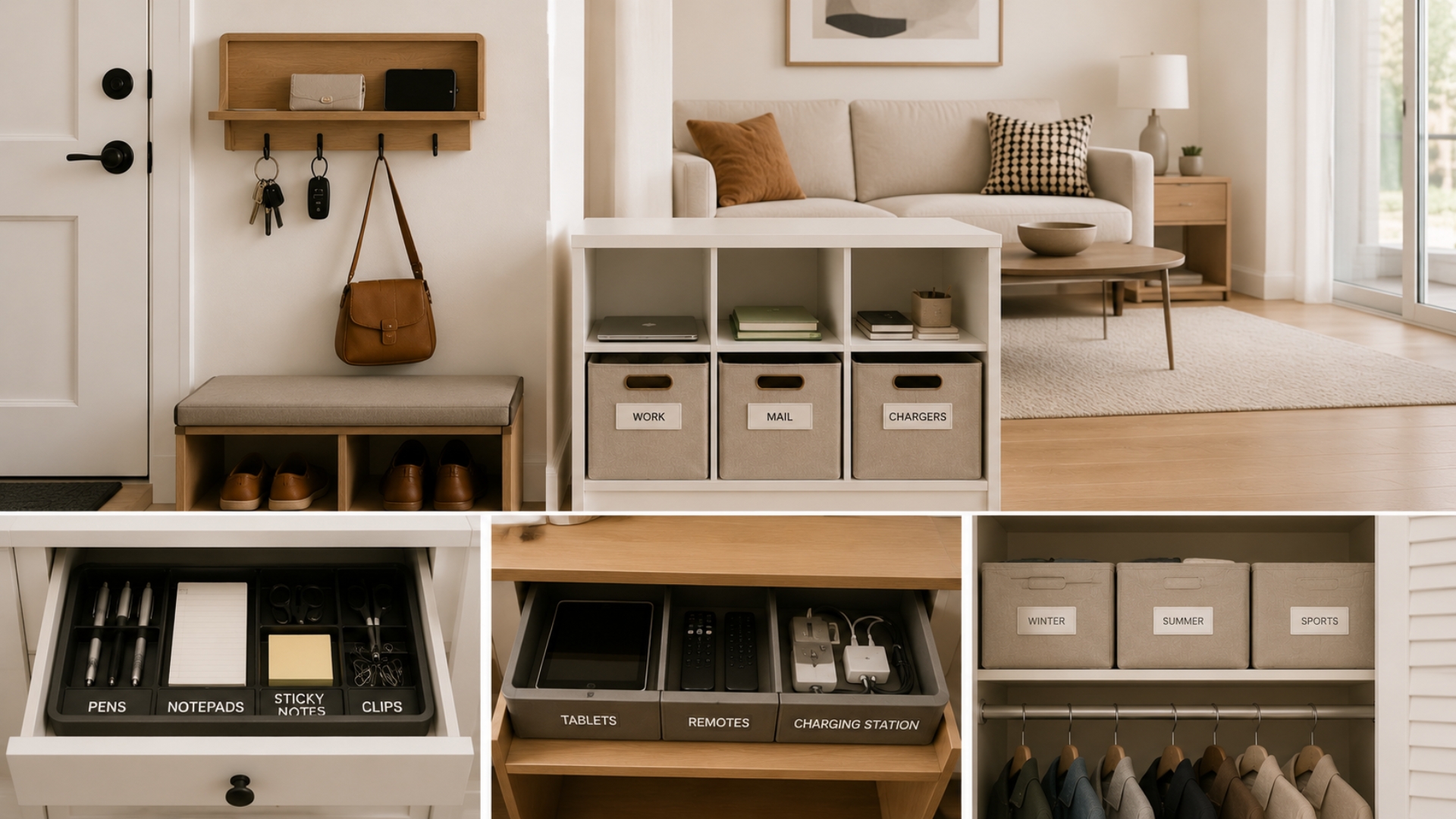
An organized home is not necessarily a tidy home all of the time. It is a home where everything has a specific place and returns to that place consistently. Creating dedicated zones for everyday items, keys near the front door, phone chargers in one spot, work materials in a defined area, eliminates the daily search and the daily stress that comes with not knowing where things are. This is particularly important in a small space where there is less room to absorb disorder before it becomes genuinely disruptive to daily function.
10. Organize Kitchen Cabinets and Drawers Efficiently
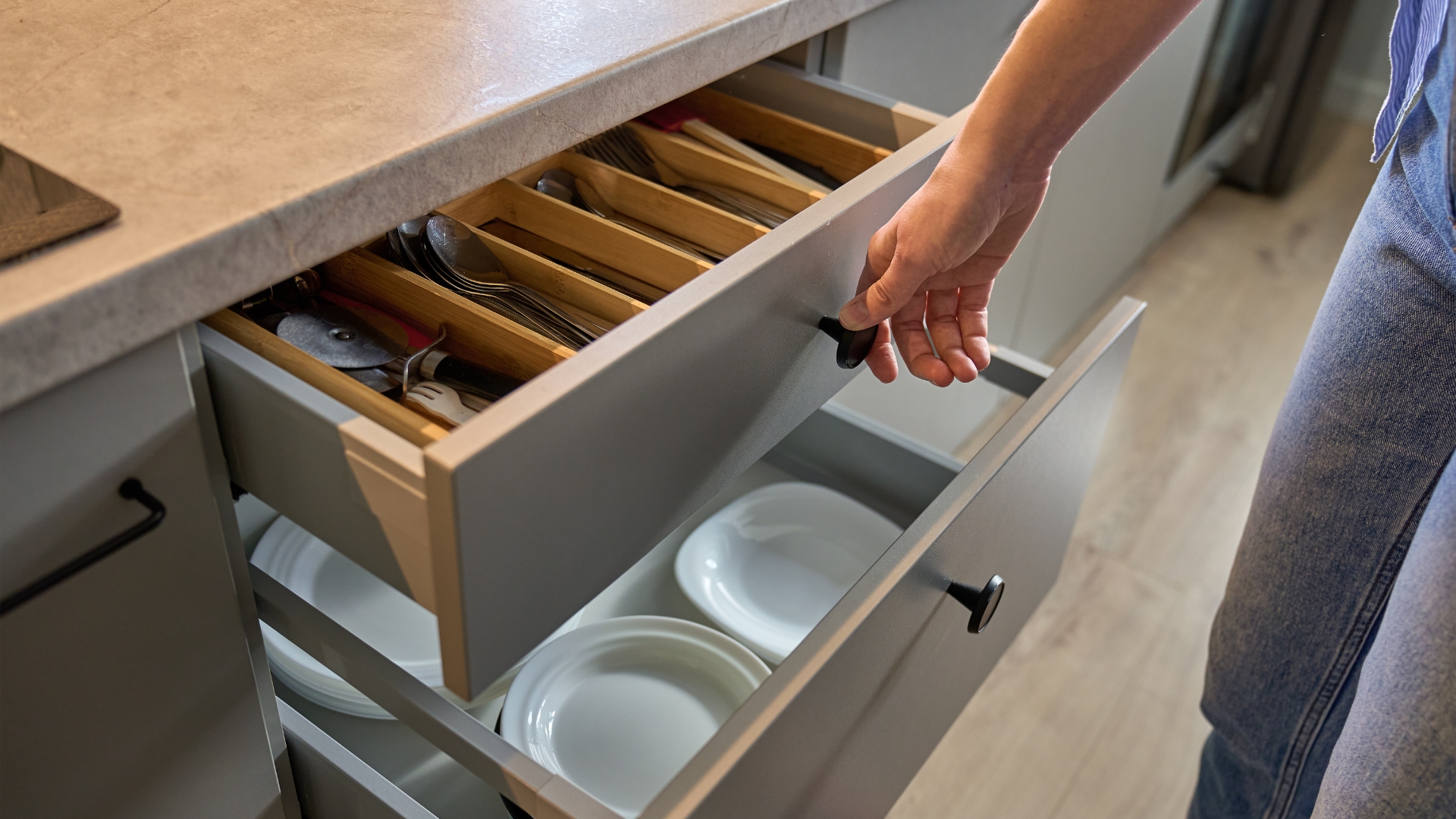
Kitchen cabinets in small homes accumulate disorder faster than almost any other storage area in the house. Pull-out organizers, stacking shelf inserts, and drawer dividers all increase the usable capacity of each cabinet and drawer while making everything inside visible and accessible rather than buried behind whatever happened to get stacked in front.
Group items by function and by frequency of use. Daily items go at the front and at reachable height. Less-used items go higher or further back. This small space organization principle alone saves several minutes per day across the course of a week.
11. Keep Countertops as Clear as Possible
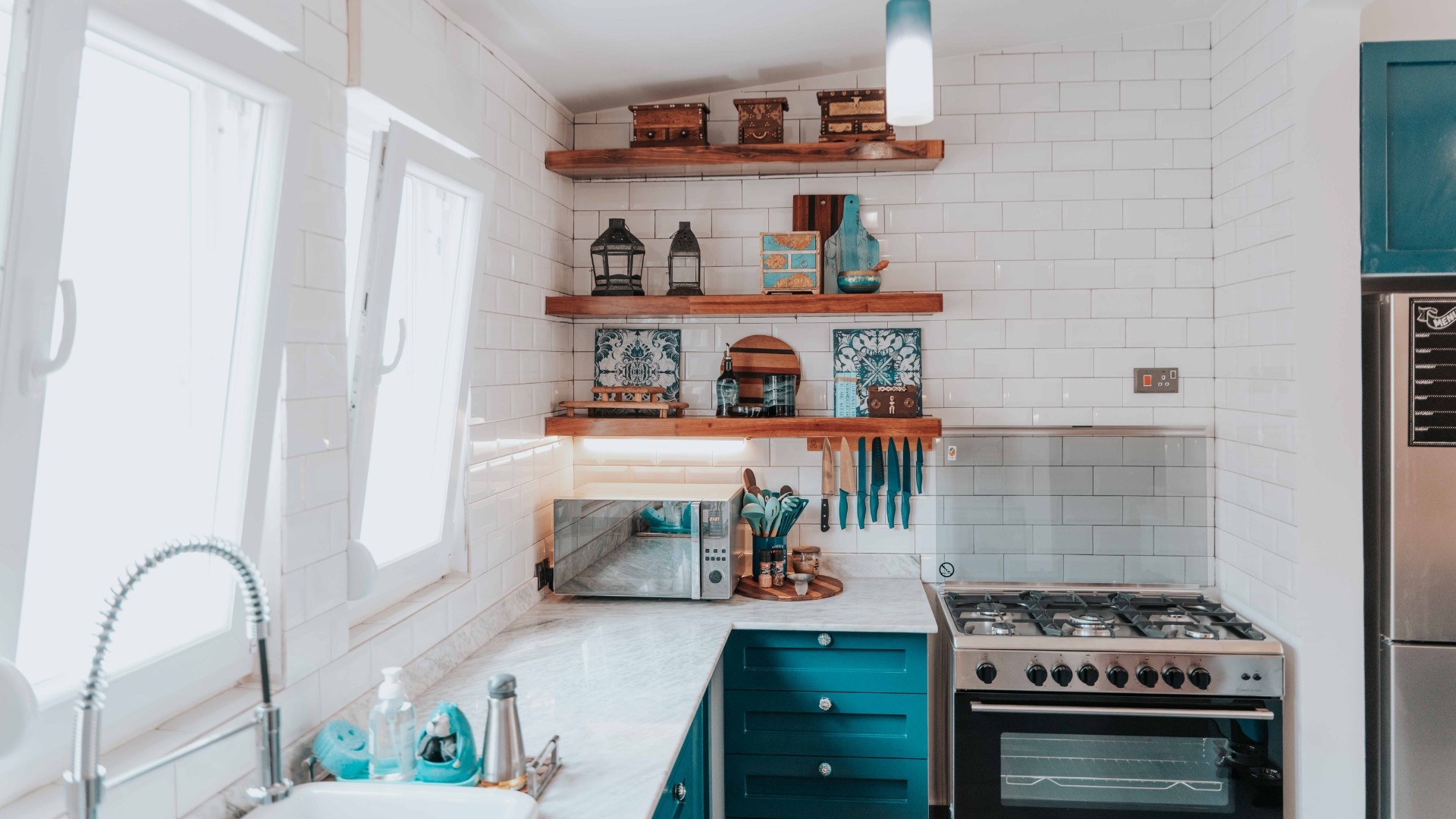
A clear countertop makes a small kitchen feel significantly larger and makes cooking genuinely easier. The home organization ideas that produce the fastest visible improvement in small kitchens almost always involve moving items off the counter and into cabinets or onto wall-mounted storage. Keep only the two or three items that are used every single day on the countertop. Everything else gets a home inside a cabinet or drawer.
12. Adopt a One-In, One-Out Rule
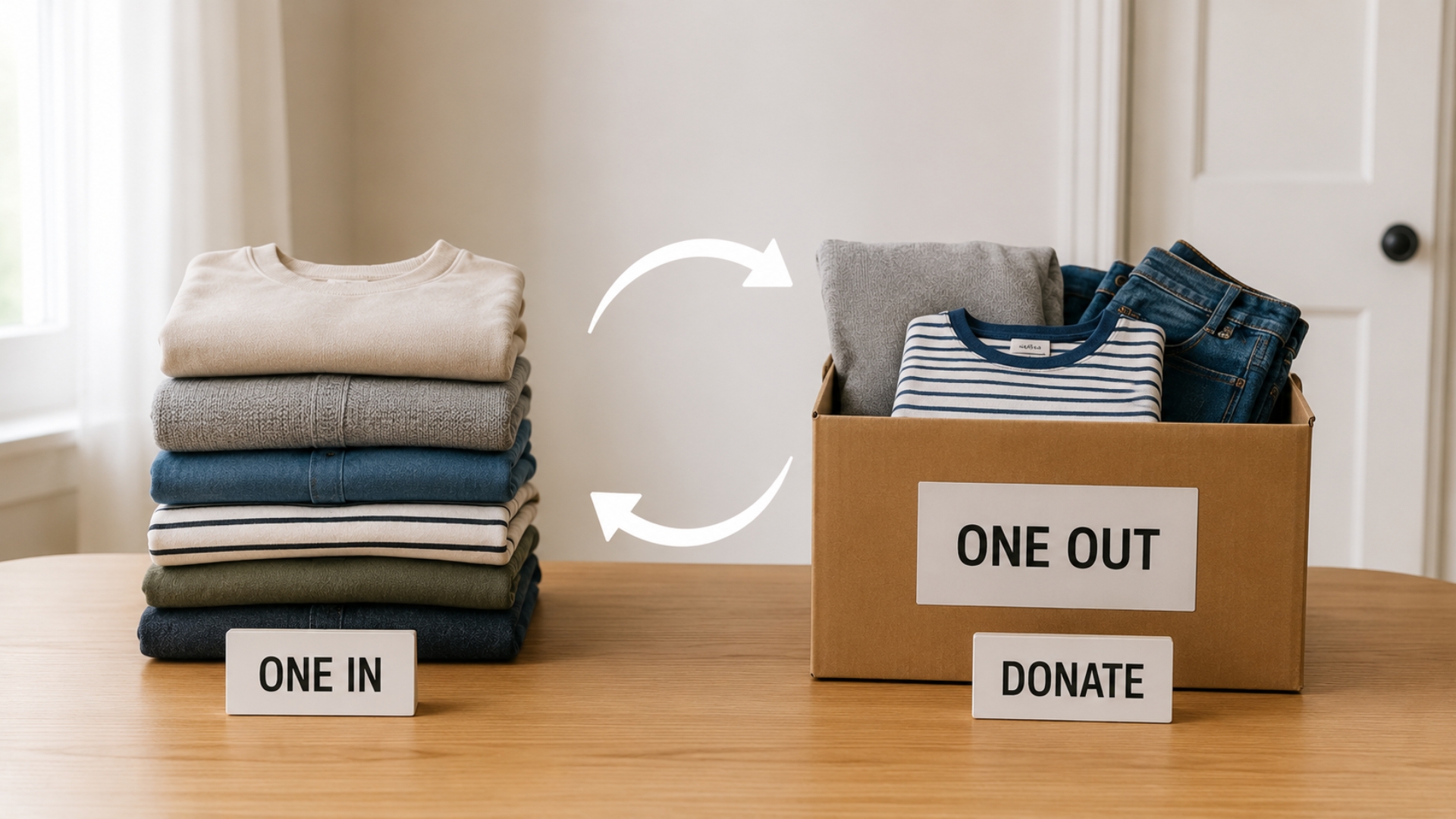
Every organization system eventually fails without a maintenance rule that prevents items from accumulating faster than they get cleared out. The one-in, one-out rule is straightforward: when something new comes into the home, something old goes out. A new shirt means an old one gets donated. A new kitchen gadget means an old one gets taken out.
This rule solves the long-term problem that most home organization ideas do not address, which is that organization is not a one-time project. It is an ongoing practice. The one-in, one-out rule makes maintenance automatic instead of requiring a periodic full overhaul.
How to Keep Small Spaces Organized Long Term
The home organization ideas covered above set up the system. Keeping it working over time requires two things: daily habits and periodic reassessment.
- A 10-minute reset at the end of each day, where everything gets returned to its dedicated zone before the night ends, prevents the accumulation that leads to a full reorganization project every few months.
- This daily investment is small enough that it does not feel like a chore and significant enough that the home consistently feels under control.
- Every three to four months, reassess the storage systems. What is working? What has become a dumping zone? What has changed about your routine that makes a previous system less relevant? Small adjustments made consistently outperform large overhauls done occasionally.
Wrapping Up…
How to Get Organized When You Live in a Small House is less about finding clever storage products and more about building honest habits around what you bring in and how consistently you return things to their place. The home organization ideas in this guide work in a single-room situation shared between three siblings, in a hostel room divided among roommates, and in any small apartment or compact home. Space is not the variable that determines whether a home feels organized. Intention is. Start with the declutter, build the systems, and maintain them with the small daily habits that keep the whole thing running without requiring another overhaul six months from now.