

Fear of failure could really leave you lacking confidence and hold you back from toiling on. The question worth asking here is whether confidence is actually within your control or whether some people simply have it and others do not.
The research says it is very much within your control, and the path to improving self-confidence does not run through grand gestures or overnight transformations. It runs through small, repeatable behaviors that shift how you see yourself over time.
Our self-image means more to us than we often realize, and what you do every day either reinforces a confident self-image or quietly erodes it. We’ll break down the actions that actually move the needle.
Table of Contents
10+ Killer Actions to Boost Your Self-Confidence
1. Groom Yourself

This one sounds surface-level until you actually pay attention to how you carry yourself on days when you have made the effort versus days when you have not.
A 2012 study published in the Journal of Experimental Social Psychology found that what people wear and how they present themselves physically influences their own cognitive processes, not just how others perceive them.
Grooming is not about vanity. It is about sending yourself a signal before the day begins that you are worth the effort. That signal compounds. When you consistently treat your physical presentation as a priority, your internal baseline for self-confidence adjusts upward in a way that is hard to manufacture through mindset work alone.
2. Dress Nicely

Dressing well is a daily confidence habit that costs nothing beyond intentionality. You do not need an expensive wardrobe. You need clothes that fit, that you feel good in, and that align with how you want to show up.
Social psychologist Adam Galinsky’s research at Columbia Business School demonstrated that clothing directly affects psychological states and task performance. Dressing with intention is a form of positive self-talk that happens before you say a single word.
It is also one of the fastest ways to improve self-confidence on a difficult morning when motivation is running low and you need something concrete to anchor yourself to.
3. Think Positive
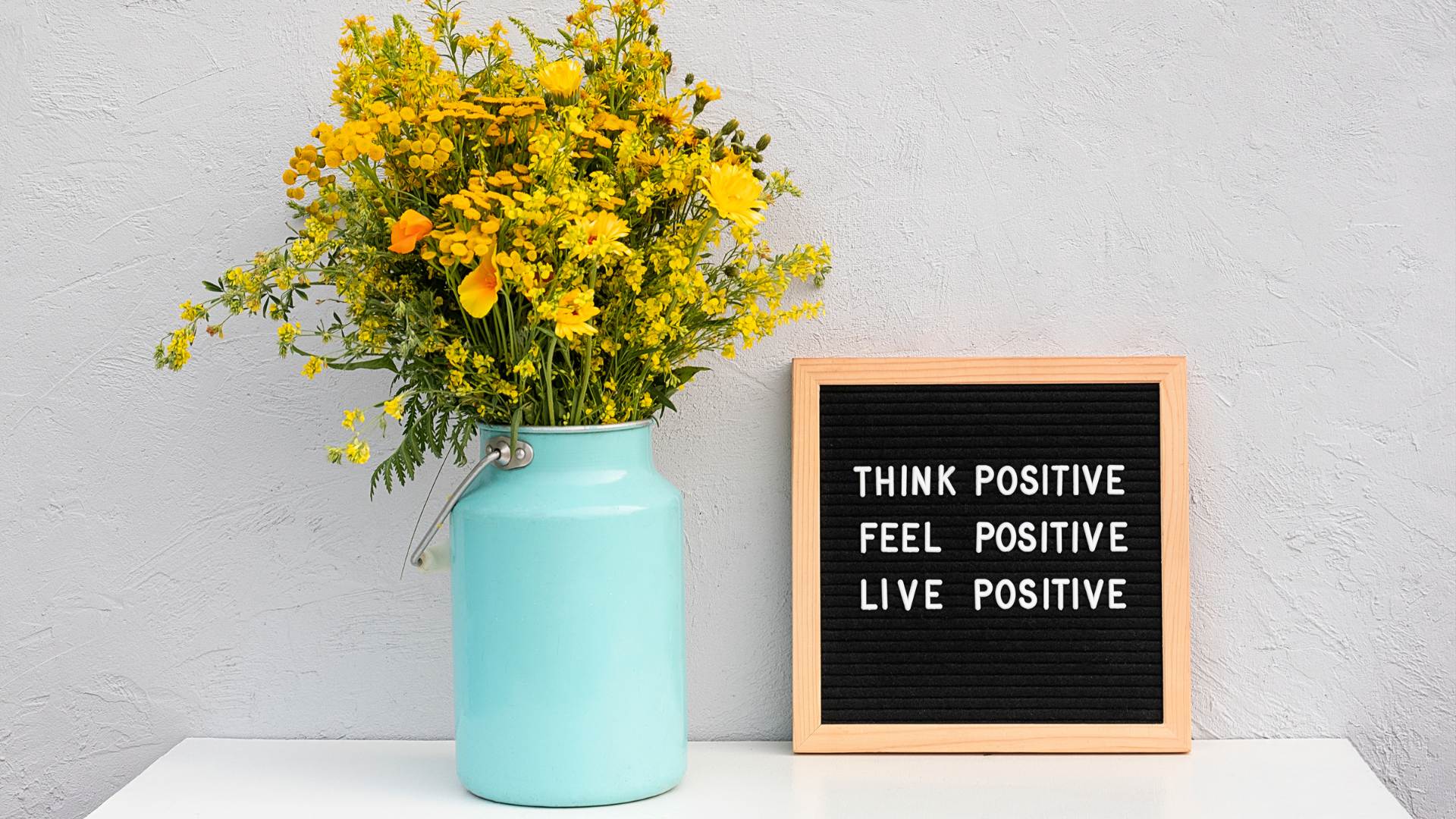
Positive thinking gets dismissed, and so does their soft advice, though. The neuroscience behind it is genuinely solid.
A 2015 study in the journal Cerebral Cortex found that positive self-affirmation activates the brain’s reward centers in the same way that other rewarding experiences do.
The inner critic runs on a loop for most people, and overcome self-doubt is not possible while that loop goes unchallenged. One practical reframe that actually works: treat a negative thought like a bug you spotted on the wall.
You notice it, you name it, and you deal with it rather than letting it crawl around unchecked. Recognizing negative self-talk as a pattern.
4. Speak Slowly

If you have watched Peaky Blinders, then Tommy Shelby demonstrates this better than any textbook could. A person in authority speaks slowly. They do not rush to fill silence or stumble over words trying to get approval. Slower speech signals that what you are saying is worth waiting for, and it also gives you time to think.
Research from the University of Michigan found that speech rate significantly influences how listeners assess the speaker’s credibility and competence (interviewers who spoke moderately fast, at a rate of about 3.5 words per second, were much more successful at getting people to agree).
Speaking slowly is a body language shift that improve self-confidence from the outside in because the physical act of slowing down actually reduces anxiety in real time through its effect on the nervous system.
5. Know Your Principles and Live Them

Self-confidence built on external validation is fragile. Confidence built on a clear sense of your own values is considerably more durable. When you know what you stand for and your daily actions reflect that, you develop a consistency between your internal standards and your external behavior that is genuinely stabilizing.
The journal practice is useful to improve self-confidence. Write down your three core values and then note at the end of each day one example of where you lived them and one where you fell short. That kind of honest self-accounting builds a growth mindset around personal integrity as opposed to treating values as something you aspire to abstractly.
6. Kill Negative Thoughts

The inner critic does not respond well to suppression. You probably know about it. The more you try not to think something, the more you think it. What actually works is interruption and replacement. When a self-defeating thought surfaces, the goal is to notice it specifically, label it as unhelpful, and redirect toward a more accurate alternative.
Self-compassion researcher Kristin Neff at the University of Texas has published extensively on the finding that self-compassion produces better outcomes for motivation and performance than self-criticism does.
Overcome self-doubt requires treating yourself with the same basic fairness you would extend to someone else in the same situation, not with uncritical positivity but with fair, proportionate evaluation.
7. Be Grateful

Gratitude practice consistently shows up in the psychology research as one of the most effective natural confidence boosters available without a prescription.
A 2003 study by Emmons and McCullough in the Journal of Personality and Social Psychology found that participants who wrote down things they were grateful for weekly reported higher levels of well-being, optimism, and life satisfaction than control groups.
Gratitude works against the confidence problem because it actively counters the negativity bias that tells you what is wrong with you and your life more loudly than it reports what is working. Three specific things written down each morning is enough to shift the ratio meaningfully over time.
8. Exercise

This one shows up on almost every list i encountered up to now. Leaving it off would be doing you a genuine disservice. Exercise is one of the most well-documented ways to improve self-confidence because it works through multiple pathways simultaneously.
The physical changes improve body confidence directly. The neurochemical changes, specifically increases in dopamine, serotonin, and norepinephrine, lift mood and reduce anxiety in ways that make self-doubt less loud.
You do not need to become an athlete. Twenty minutes of movement most days is enough to access most of the psychological benefits.
9. Volunteer

Social exposure through volunteering builds confidence through a mechanism most people do not anticipate. When you contribute to something larger than your own concerns, the self-focused rumination that feeds overcome self-doubt naturally loses its grip. Volunteering also places you in social situations where you are defined by what you contribute.
Chloë Bean, LMFT, who specializes in somatic trauma-informed therapy, notes that activities outside your usual routine, including interests that feel more like play than productivity, help shift the nervous system out of constant performance mode and back into states of curiosity and emotional regulation. Volunteering falls into that category in a useful way.
10. Smile

The facial feedback hypothesis, supported by research across multiple laboratories, found that the physical act of smiling influences emotional state.
Smiling more deliberately is a small wins strategy for improve self-confidence because it changes your neurochemical state in real time, signals approachability to others, and tends to generate positive social responses that reinforce themselves. It costs nothing and takes no preparation.
11. Focus on Solutions

People who consistently improve self-confidence over time share one behavioral pattern that stands out clearly. They orient toward what can be done instead of dwelling on what went wrong. This is not toxic positivity. It is a practical cognitive shift toward agency.
When something goes sideways, the question worth spending time on is what the next move is, not how bad the situation is. Solution focus keeps the locus of control internal, which is the psychological position from which confidence actually grows.
12. Clear Your Desk

A clear workspace is a confidence habit because it reduces the low-level cognitive noise that makes everything feel harder than it needs to be. The act of clearing your desk before starting work is also a small behavioral ritual that signals to yourself that you are in control of your environment, which is a more meaningful psychological statement than it sounds.
13. Work on Small Things
Small wins are one of the most underrated tools available for building self-confidence sustainably. Teresa Amabile and Steven Kramer’s research at Harvard Business School found that progress, even incremental progress, is the single most powerful driver of positive inner work life on any given day.
When you string small wins together consistently, you build evidence for your own competence that no affirmation alone can manufacture. Start with tasks you know you can complete. The momentum those completions generate is real and it carries forward into harder work.
14. Do Something You Have Been Procrastinating On

Procrastination and low self-confidence feed each other in a cycle that is worth breaking deliberately. Every task sitting undone on your mental list is drawing a quiet tax on your confidence because it is a daily reminder that you have not acted.
Completing one thing you have been avoiding, even something small, breaks that cycle and produces a disproportionately large boost in how capable you feel. Many women equate their worth with productivity, notes Chloë Bean, LMFT, so tackling something that has been sitting undone carries extra psychological weight.
The relief and momentum that follow finishing a long-avoided task are among the most reliable natural confidence boosters you can access on any given day.
Frequently Asked Questions (FAQs)
What causes lack of self-confidence?
Low self-confidence typically develops through a combination of early experiences, repeated criticism or failure without adequate support, social comparison, and the reinforcement of negative self-talk patterns over time. Cognitive behavioral research identifies distorted thinking patterns, specifically catastrophizing, overgeneralizing, and personalization, as the primary maintenance mechanisms for low confidence in adults.
What are the 5 C’s of self-esteem?
The five C’s most commonly referenced in self-esteem literature are competence, confidence, connection, character, and contribution. Competence builds through skill development and small wins. Confidence grows from evidence of past success. Connection comes from meaningful relationships. Character reflects alignment between values and behavior.
What are the 4 P’s of confidence?
The four P’s framework covers preparation, practice, patience, and perspective. Preparation reduces anxiety before challenging situations. Practice builds the competence that genuine confidence requires. Patience acknowledges that lasting change takes more time than most people allow for. Perspective keeps setbacks proportionate rather than catastrophic. Together they form a practical operating model for anyone working to improve self-confidence in a sustainable way.
Wrapping Up…
How you can actually change your thoughts and build real confidence is a question worth sitting with seriously. It sounds simple on the surface, and the inner critic is quick to say this is too hard or not worth the effort. That voice is the exact thing you are working against. The actions in this guide are not complicated. They are consistent. Grooming yourself, dressing well, exercising, practicing gratitude, clearing your environment, finishing what you have avoided, these behaviors build a body of evidence that you are capable and worth investing in. Improving self-confidence is not something that happens to you. It is something you build deliberately, one small action at a time, until the evidence becomes impossible to argue with.