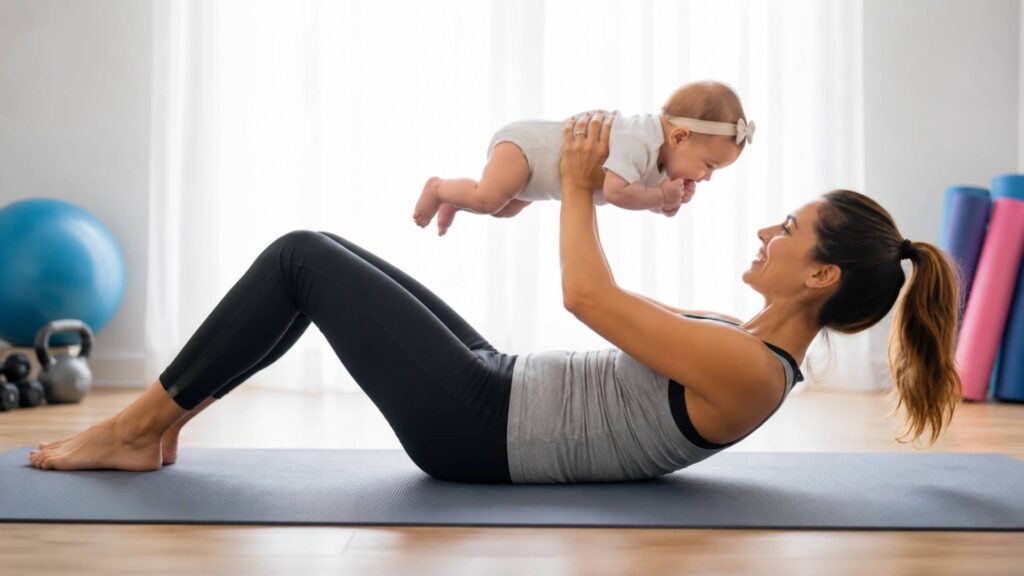

You pick up your baby for the hundredth time that day and something in your lower back just aches. Or you sneeze and feel a little leak you definitely did not expect. Or you look down and notice your postpartum belly still looks three months along even though you delivered weeks ago.
Nobody prepares you for what pregnancy actually does to your midsection. The focus is always on the birth itself, the newborn care, the feeding. Your core gets left out of the conversation almost entirely, until something stops working the way it should and you start searching for answers at midnight. Here is what actually happened to your body, and more importantly, what you can do to strengthen your core after pregnancy.
Table of Contents
What Is the Core?
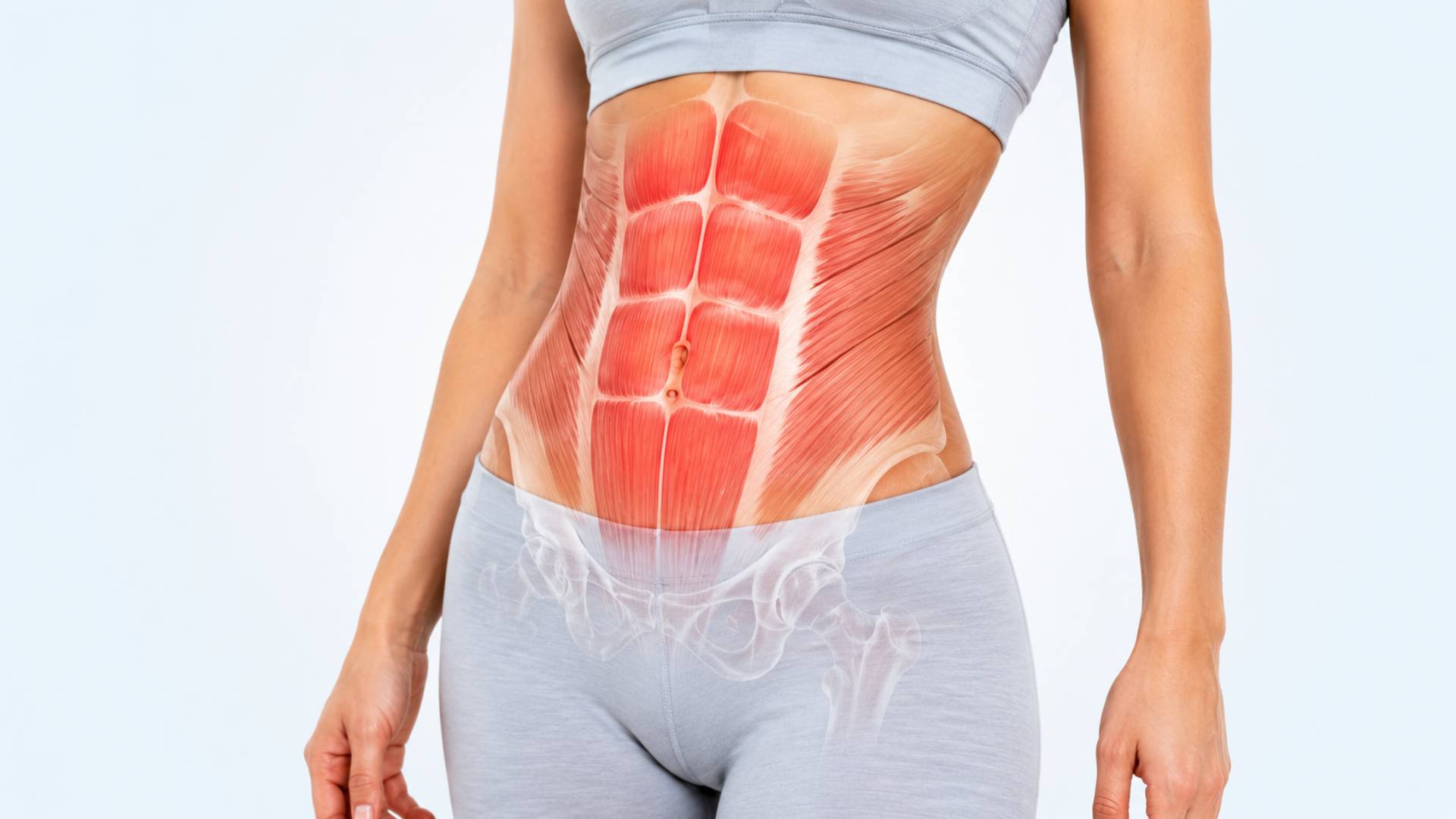
When most people say “core,” they mean abs. The visible ones. The kind you see on a fitness magazine cover. That’s a very small part of what the core actually is.
Your core is made up of your deep abdominal muscles, obliques, rectus, and transversus abdominis muscles. These muscles act as a corset around your torso, wrapping from the front of your abdomen all the way around to your spine.
The best way to make sure your spine and abdomen stay protected during any movement is to treat all of these layers as one connected system, because that is exactly what they are.
Why Does My Core Strength Change During Pregnancy?
When you are pregnant, your expanding belly does not just grow outward. It physically pulls on the abdominal wall from the inside. The abdomen presses outward steadily over nine months, and the connective tissue that joins the two sides of the rectus abdominis muscle stretches to create space for the baby.
The rectus abdominis is made up of two parallel bands of muscles located on either side of your torso. When that middle connective tissue stretches beyond a certain point, those two bands separate. This condition, diastasis recti recovery, is far more common than most women are told.
Research published in the Journal of Orthopaedic and Sports Physical Therapy found it present in nearly 39% of women at six months postpartum.
On top of that, your pelvic floor carries the full load of your growing uterus throughout pregnancy and takes significant stress during delivery. Both systems, the abdominal wall and the pelvic floor, need careful rebuilding before anything more demanding enters the picture.
8 Safe and Effective Postpartum Core Exercises
1. Pelvic Floor Activation (Kegels)
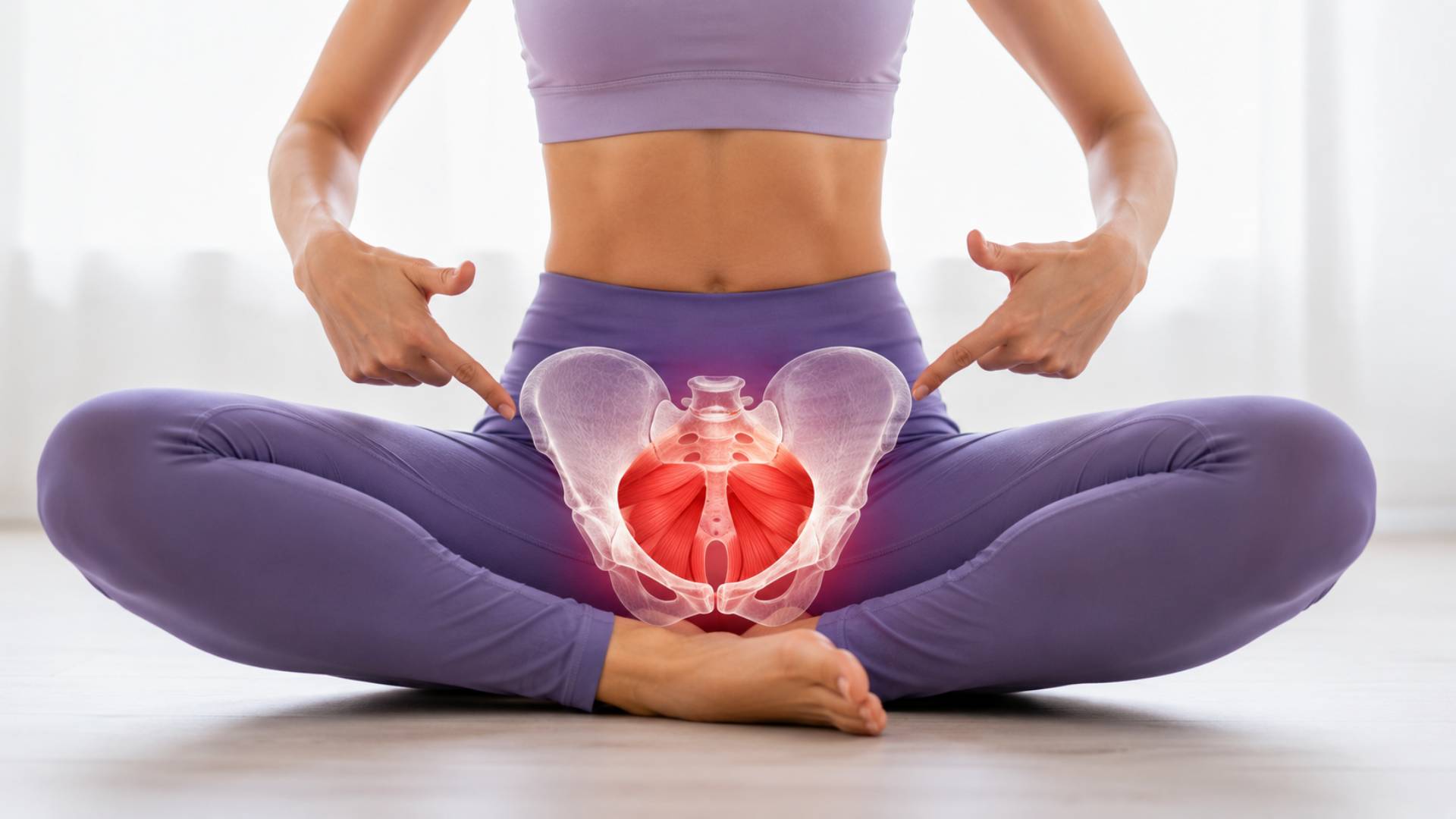
Every safe postpartum workout starts here, full stop. Your pelvic floor sits at the base of your pelvis and supports your bladder, bowel, and uterus. After delivery, whether vaginal or cesarean, those muscles are either overstretched or simply disconnected from your normal movement patterns. A Kegel is straightforward.
- Contract the muscles you would use to stop urine mid-flow.
- Hold that contraction for three to five seconds, then let it go completely.
- The release matters just as much as the squeeze.
- A lot of women hold tension down there without realizing it, and that creates its own set of problems.
Start with ten repetitions, two or three times a day. You can do these lying in bed, sitting in a chair, or on the couch while the baby sleeps on you. No equipment, no setup required and it would obviously gonna help you strengthen your core after pregnancy to a large extent.
2. Deep Core Breathing (Diaphragmatic Breathing)
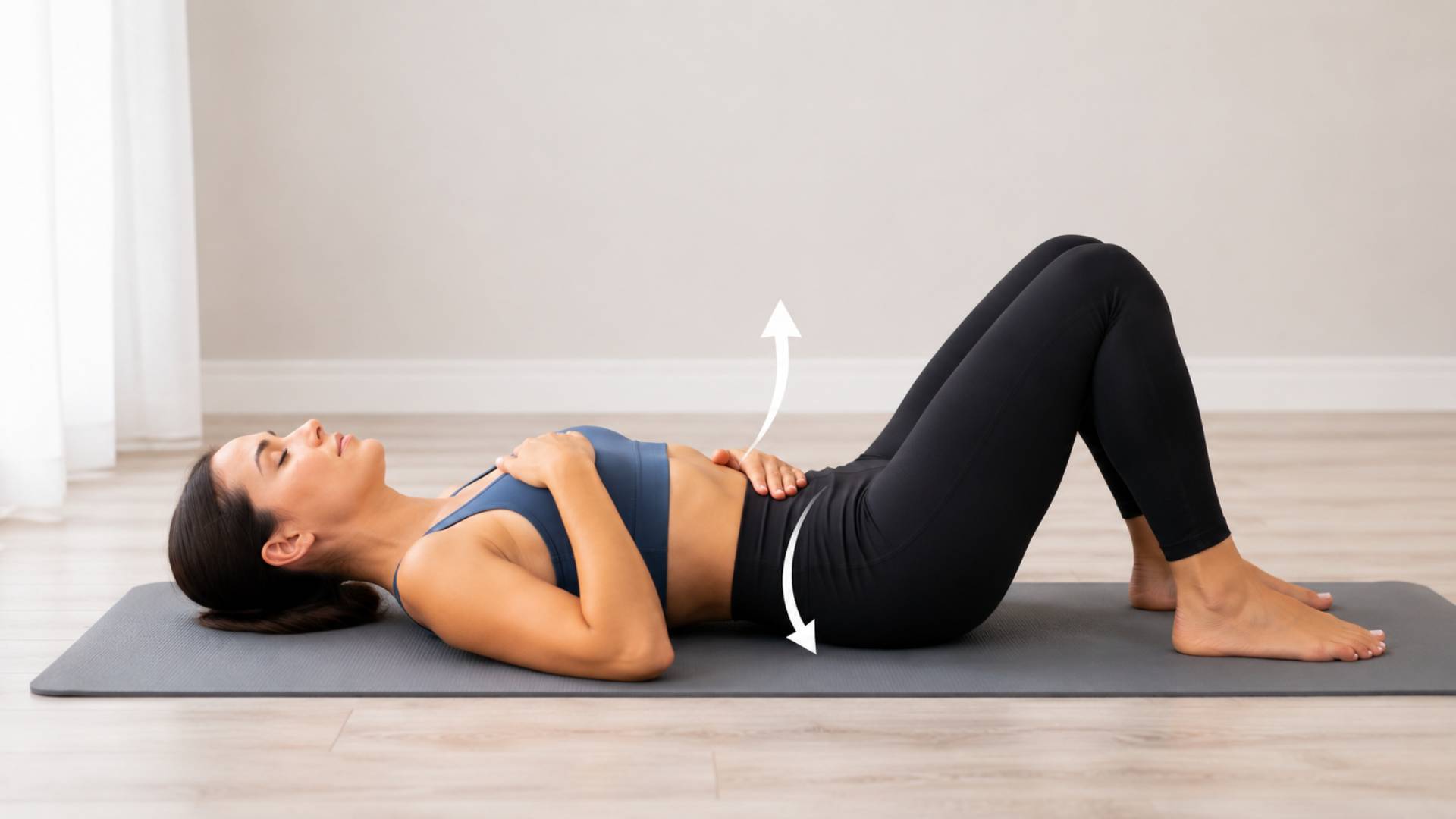
Before any movement-based work makes sense, breathing exercises come first. Not as a warm-up. As actual training.
- Lie on your back with your knees bent and feet flat on the floor.
- One hand on your chest, one on your belly.
- Breathe in through your nose and let your belly rise toward your hand.
- Then exhale slowly through your mouth, and as you do, gently draw your belly button in toward your spine.
That drawing in is your first real deep core activation after birth. The breath and the core are not separate systems. When your breathing mechanics are off, your core cannot work the way it should. This is why physical therapists start here before they introduce any exercise at all.
3. Transverse Abdominis Activation
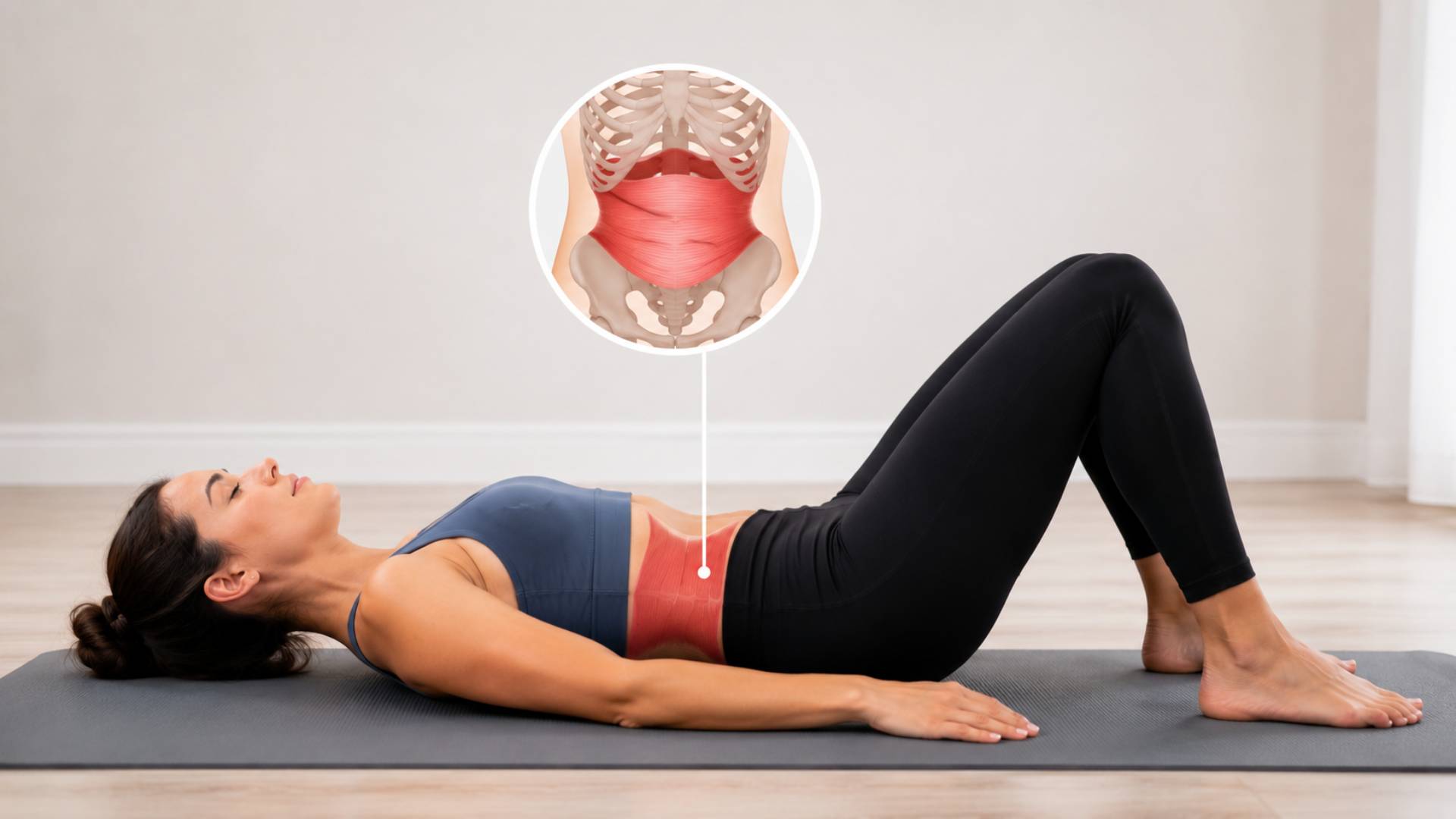
You may think of building a six-pack when someone says core training. The transverse abdominis is nothing like that. It is the deepest layer of your abdominal wall, and it is the one that wraps horizontally around your midsection like an internal support belt.
Pregnancy stretches and essentially sidelines this muscle for months. Getting it back online is the whole point of early postpartum core exercises.
- Stay in the same position from the breathing drill.
- On your exhale, pull your lower abdomen gently inward without tucking your pelvis or gripping anywhere else.
- Hold five seconds.
- Let go completely.
- Ten reps.
- It will feel almost too subtle at first. That subtlety is the point.
4. Heel Slides
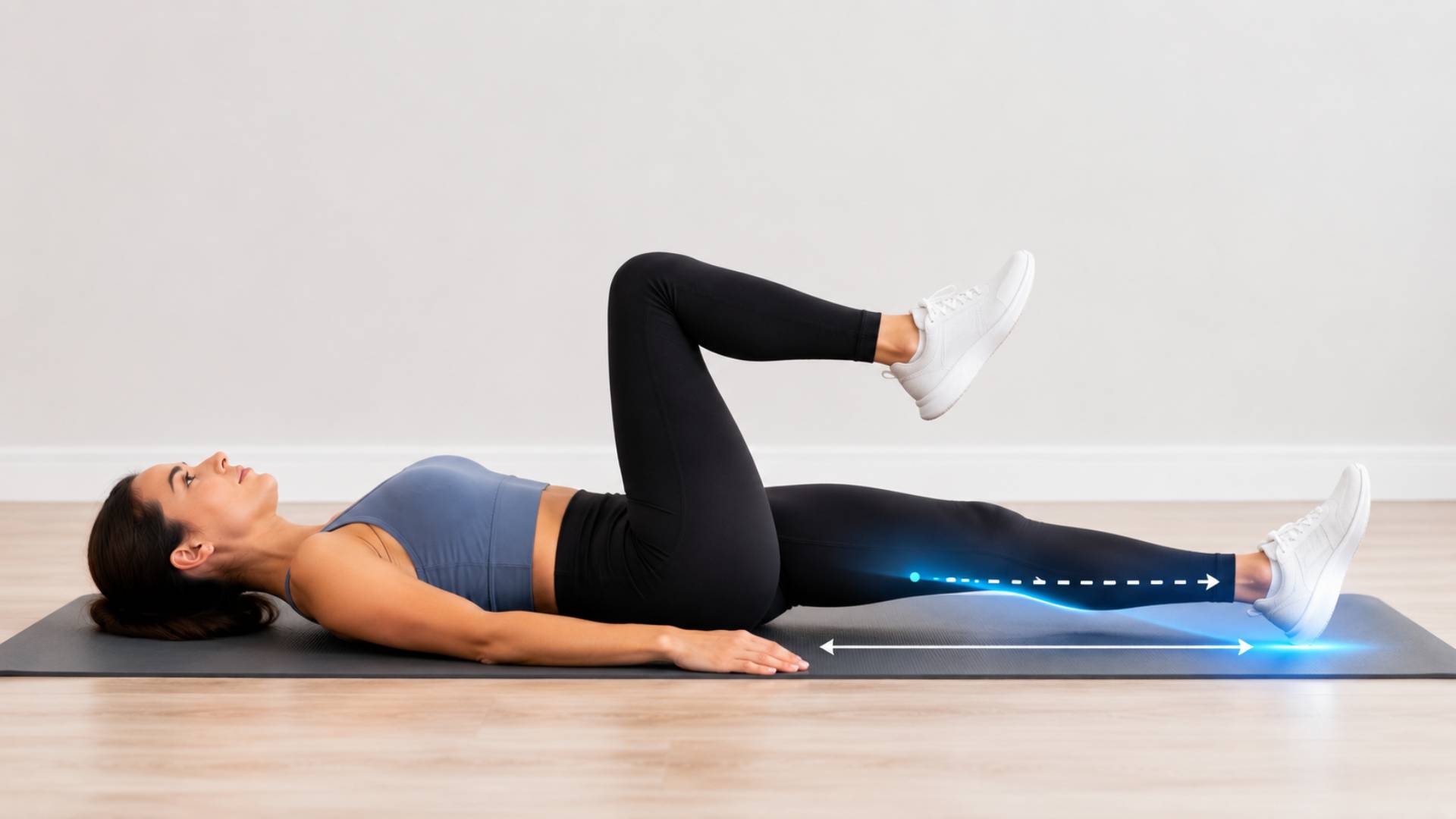
- Lie on your back with your legs together and bent at a 90-degree angle, and your pelvis in a neutral position, neither tucked nor arched.
- Take a breath in, and on the exhale draw in your deep core.
- Then slowly slide one heel along the floor until the leg is nearly straight. Slide it back. Switch sides.
This exercise keeps your spine completely supported the entire time, which makes it one of the safest ways to begin loading the core in the first few weeks. The movement is slow and deliberate, which is exactly what this stage calls for.
5. Modified Dead Bug
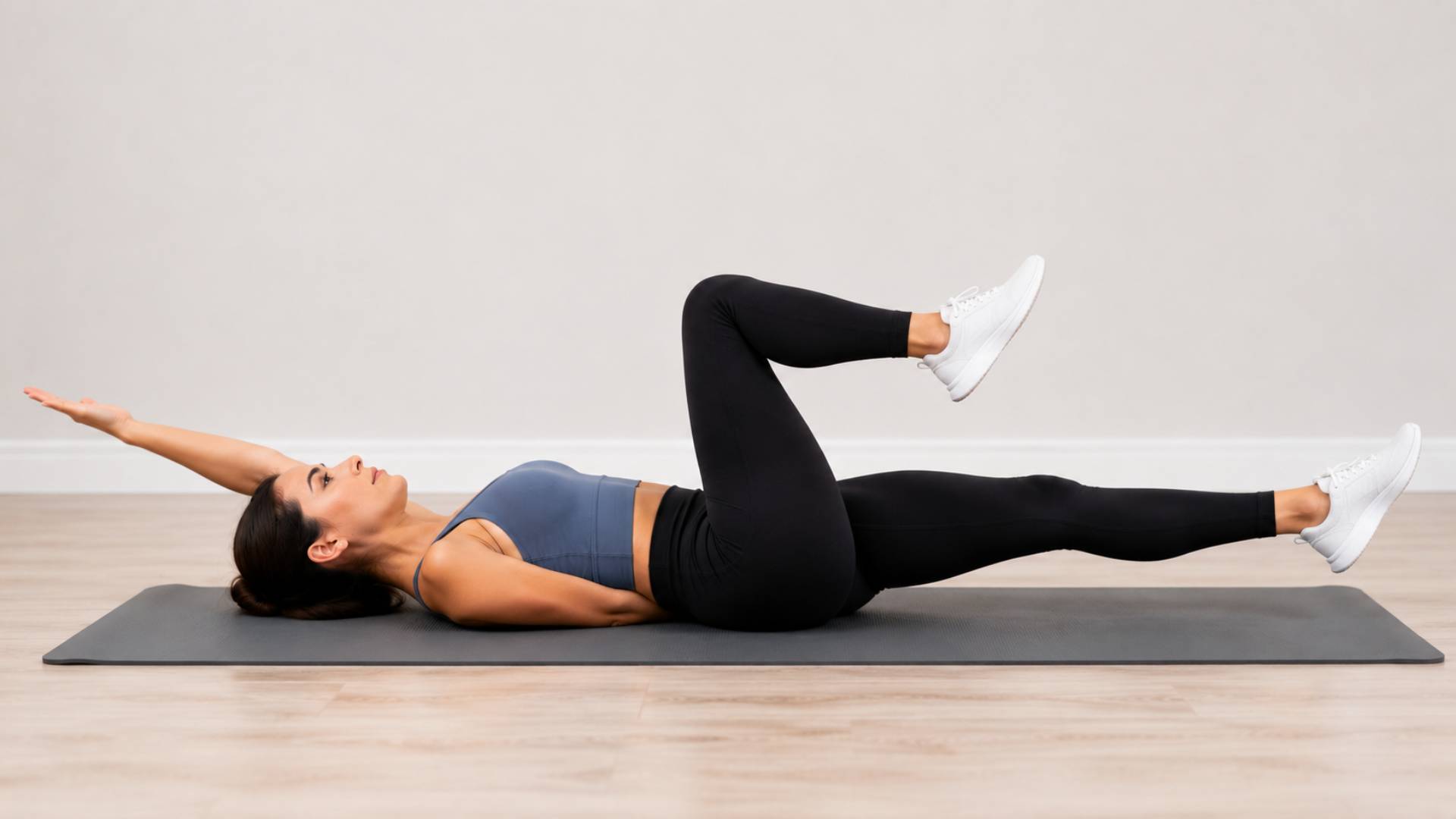
Same starting position. This time, extend one arm overhead and the opposite leg out straight simultaneously, then return and switch sides. Keep your lower back from arching off the floor throughout.
Core activation here is the whole goal, not the arm or leg movement. Your core is resisting the pull of the extended limbs, which trains stability. If your back lifts or your breath catches, shorten the range of motion before anything else.
6. Bird Dog

- Come to your hands and knees.
- Wrists under shoulders, knees under hips, spine neutral.
- Extend your right arm and left leg at the same time, hold for three seconds with control, then return slowly.
- Alternate sides. It earns its reputation in postpartum core exercises programs because it works across multiple layers at once without asking too much of a healing body.
7. Side-Lying Leg Lifts
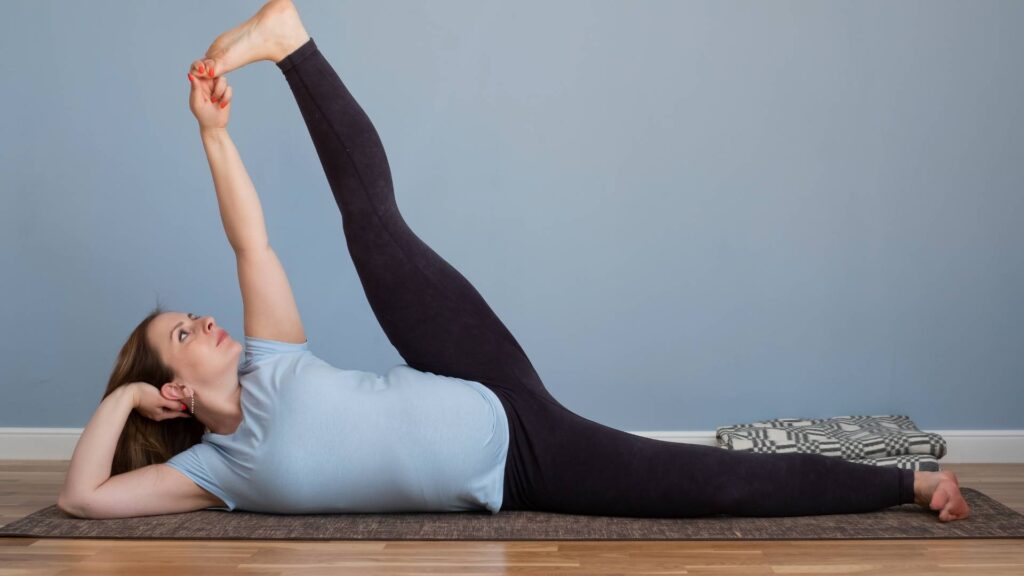
- Lie on your side, body in a straight line, hips stacked.
- Lift your top leg to roughly 45 degrees, pause at the top, then lower with control.
- Ten to fifteen reps, then flip sides.
Your obliques and hip stabilizers tend to get quiet during pregnancy, and this exercise brings them back into the conversation without touching your abdominal wall directly. Both are part of what you need to strengthen core after pregnancy properly, not just the muscles in front.
8. Modified Plank Progressions
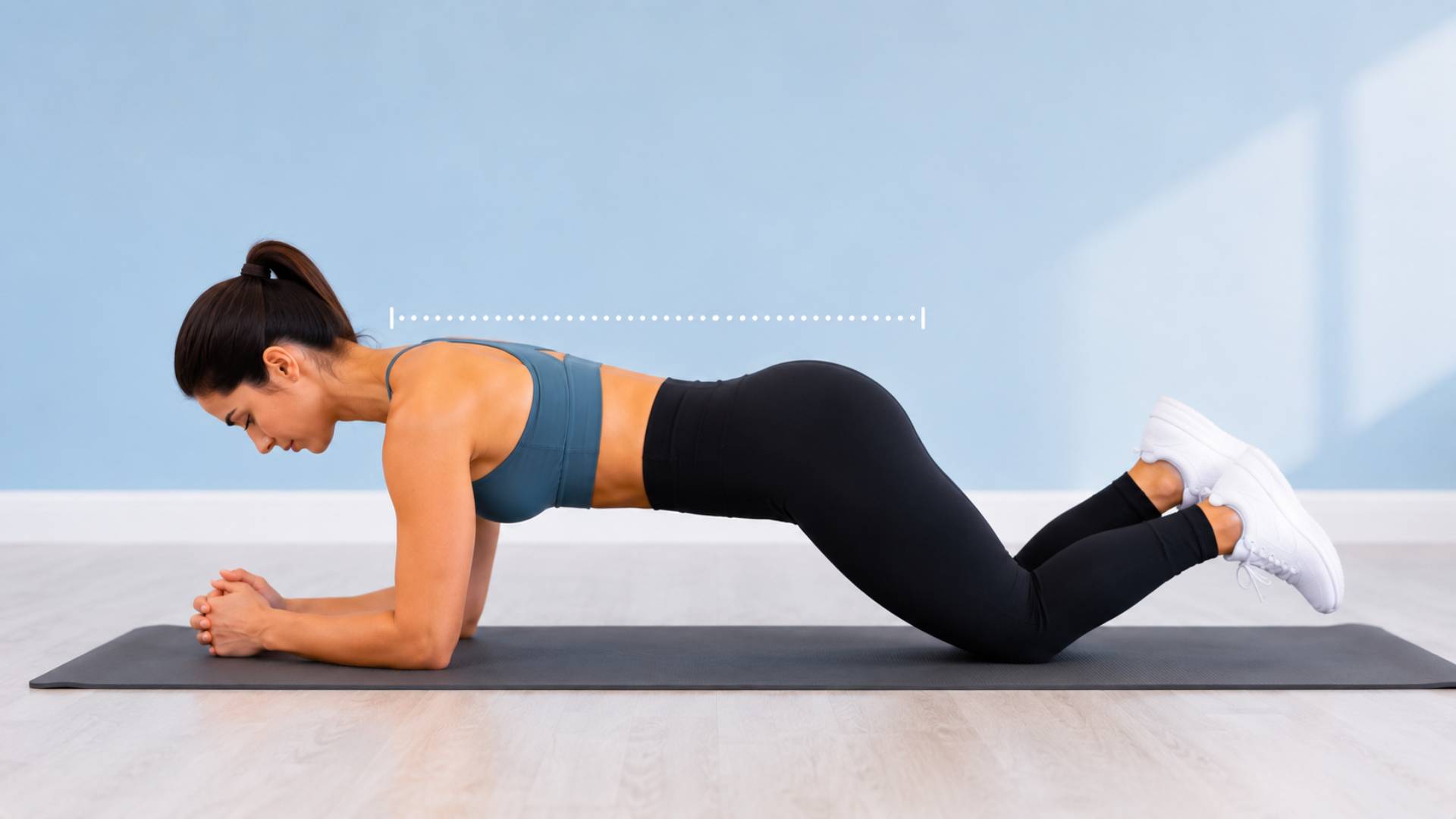
A full plank on your toes is not appropriate early in the healing timeline, and pushing into it before your core is ready can make diastasis recti recovery slower, not faster.
A modified plank on your forearms and knees is a different story. Once the earlier exercises feel genuinely stable, usually around six to eight weeks postpartum with your provider’s clearance, this becomes a reasonable next step.
- Keep your spine neutral, brace lightly through your core, and hold for 10 to 20 seconds.
- Rest fully between sets.
- Build hold time before you even think about progressing to a full plank. Safe progression at this stage is not the cautious option. It is the smart one.
Frequently Asked Questions (FAQs)
Why is my core so weak after pregnancy?
Your abdominal wall spent nine months under progressive stretch and load. The connective tissue between the two bands of your rectus abdominis widened to accommodate your growing baby, your pelvic floor was under sustained pressure throughout, and the coordination between all of those muscle groups was disrupted along the way.
How long does it take to regain core strength after pregnancy?
Most women notice real, functional improvement within six to twelve weeks of consistent postpartum core exercises done correctly. Full recovery, particularly when diastasis recti recovery is part of the picture, often runs closer to six months to a year. The healing timeline varies based on how you delivered, whether there were complications, and how your body responds to progressive loading over time.
How to rebuild your core postpartum?
Start with pelvic floor work and breath-based deep core activation in the first two to four weeks. Add heel slides and transverse abdominis work as those feel stable. Progress to Bird Dog, modified dead bug, and eventually modified plank as your control improves. A pelvic floor physical therapist can assess whether diastasis recti is present and give you a program built specifically around your body.
What is the 5 5 5 rule after birth?
The 5 5 5 rule is a postpartum rest framework that breaks the first fifteen days into three phases. Five days in bed, five days on the bed, and five days near the bed. The idea is to protect your body during the most vulnerable window of early recovery before you attempt to strengthen core after pregnancy or build any kind of workout routine. It is a guideline, not a medical protocol, but the principle behind it is sound.
Wrapping Up…
The pressure to bounce back after having a baby is everywhere, and most of it is completely counterproductive. To genuinely strengthen your core after pregnancy, it would take more than a few weeks of crunches. It also takes rebuilding from the inside out, starting with the layers that actually support your spine and pelvis before working toward anything more demanding.
A sit-up or crunch that pulls on the head and neck and forces the pelvis to tuck under is not just unhelpful at this stage. It can actively set you back. The women who come out of postpartum recovery with real, lasting core strength are the ones who did not skip the boring early steps. Start there. Build honestly. Your body will respond.