

The first ten minutes after waking up set the tone for everything that follows, and most people spend those minutes reaching for a phone instead of building something intentional. Morning journal prompts offer a genuinely simple alternative that takes almost no time but shifts how the rest of the day unfolds.
Research from the Greater Good Science Center at UC Berkeley has repeatedly shown that structured reflection practices, particularly ones involving gratitude, correlate with measurable improvements in mood and life satisfaction.
This piece walks through how to start a morning journaling routine, then covers seven positive thinking journal prompts you can use starting tomorrow. None of it requires special skill or a fancy notebook. Just a few honest minutes before the noise of the day sets in.
Table of Contents
How to Start a Morning Journaling Habit
- Keep it simple. You do not need elaborate templates or color coded systems. A blank page and an honest answer beats an overdesigned journal that sits unused after week one.
- Choose a dedicated journal. Having one specific notebook or app reserved only for this practice creates a psychological anchor. It signals to your brain that this time is different from a to do list or work notes.
- Set a 5 to 10 minute routine. Short sessions are sustainable. Long, ambitious sessions tend to get skipped the moment life gets busy, and that is exactly when you need the practice most.
- Focus on consistency, not perfection. Some entries will be a single sentence. Others will run longer. Both count. The goal of building daily journaling habits is showing up regularly, not writing something profound every single morning.
7 Morning Journal Prompts for Positive Thinking
1. What Am I Grateful for Today?

Gratitude journaling is one of the most researched practices in positive psychology, and for good reason.
A well known study published in the Journal of Personality and Social Psychology by Emmons and McCullough found that people who kept weekly gratitude lists reported significantly higher wellbeing than those who did not.
Starting the day naming even one or two specific things you appreciate, whether it is a warm cup of coffee or a text from a friend, primes your brain to notice more of the good throughout the day rather than defaulting to complaint mode.
2. What Will Make Today Great?
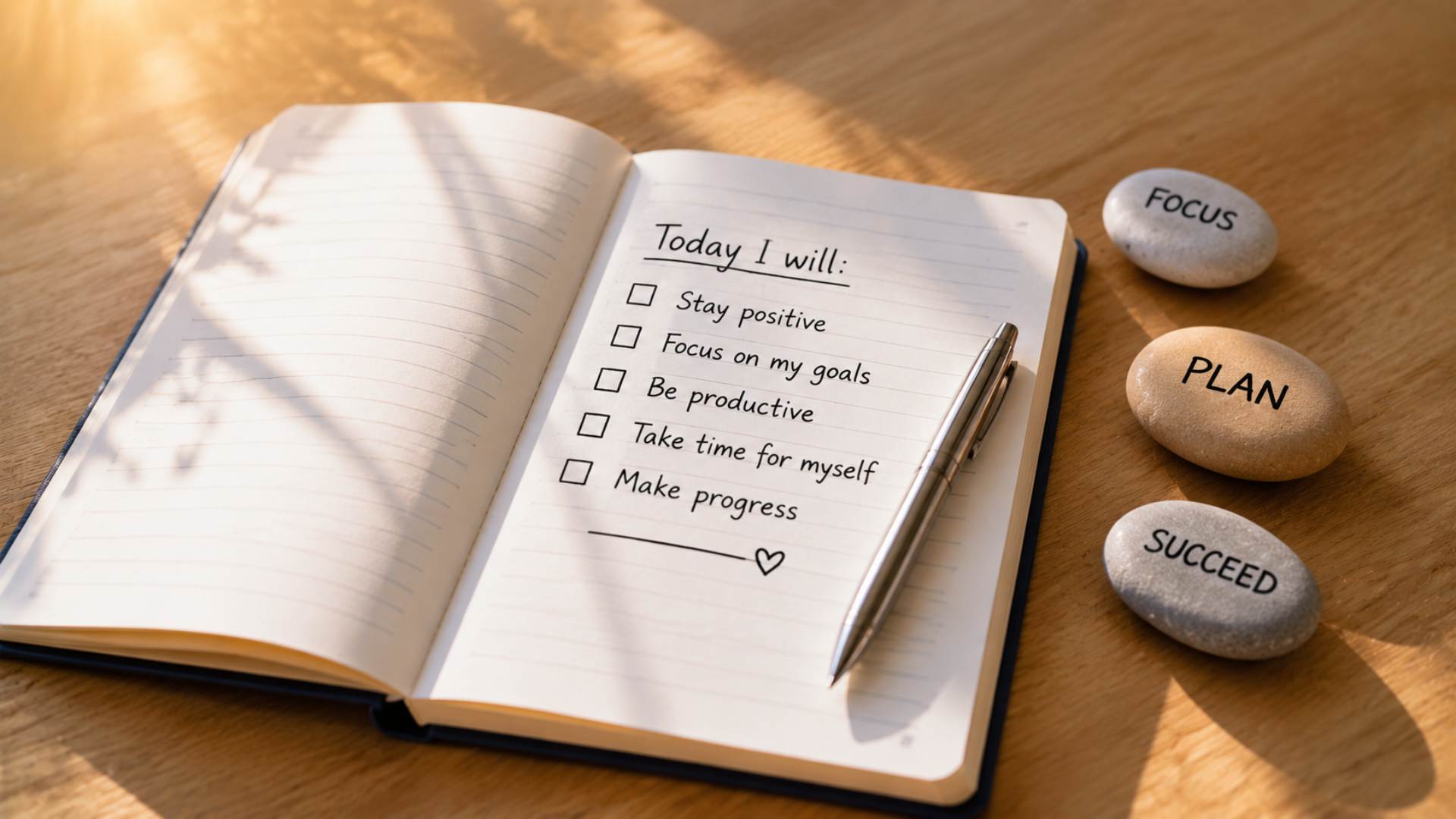
This prompt shifts focus from a passive mindset to an active one. Instead of waiting for the day to happen to you, you are naming something specific you want to create or experience. It could be as small as taking a proper lunch break or as significant as finally starting a project you have been putting off. This is one of those morning journal prompts that quietly trains you to see yourself as someone with agency over your own day.
3. How Do I Want to Feel Today?
Emotions are contagious in a way most people underestimate, including the emotions you generate internally before anyone else even talks to you. Naming a target feeling, calm, focused, playful, whatever fits, gives you a reference point to return to when the day inevitably throws something unexpected your way. This kind of self reflection prompt works because it makes emotional intention conscious rather than leaving your mood entirely up to circumstance.
4. What Am I Proud of Myself For?

Most people are far better at cataloging their failures than acknowledging their wins, even small ones. This prompt forces a deliberate pause to recognize progress, effort, or a decision you made well, even if the outcome was not perfect. Over weeks of doing this consistently, you start building a mental record of competence that counters the inner critic most of us carry around without even realizing it.
5. What Is One Thing I Can Improve Today?
Positive thinking is not about pretending everything is fine all the time. It includes honest, constructive self assessment too. This prompt keeps the practice grounded rather than saccharine. Naming one specific, actionable area for growth, without spiraling into self criticism, is a healthy form of accountability that supports genuine personal growth journaling rather than empty positivity.
6. What Positive Affirmation Do I Need Today?

Affirmations get a mixed reputation, partly because they are often used badly, repeating vague statements you do not actually believe. Used well, though, a specific affirmation tied to something you are actually working through, like “I can handle difficult conversations calmly,” gives your mind language to reach for later in the day when things get tense. This is one of the more direct positive thinking journal prompts on this list because it hands you a tool you can use hours after you close the notebook.
7. What Am I Looking Forward To?
Anticipation is its own form of happiness, and researchers have found that people often derive as much satisfaction from anticipating a positive experience as from the experience itself. Naming something you are genuinely looking forward to, a weekend plan, a meal, a conversation, gives your brain a small dopamine anchor to carry through a mundane Tuesday. It is a small habit with an outsized effect on mental clarity and mood throughout the day.
Frequently Asked Questions (FAQs)
How long should morning journaling take?
Five to ten minutes is plenty for most people. The goal is consistency over volume, and a short daily entry compounds far more than an occasional long one. If you find yourself with more to say some mornings, let it run longer, but do not feel obligated to fill pages every single day.
Can journaling really improve positivity?
Beyond the Emmons and McCullough gratitude research mentioned earlier, a study published in JMIR Mental Health found that expressive and reflective writing was associated with reduced symptoms of anxiety and depression across multiple trials. The practice works because it trains attention, and attention shapes mood over time.
What if I do not know what to write?
That is exactly what structured prompts are for. Pick one from this list and answer it honestly, even if the answer feels boring or small. The point is not eloquence. It is building the daily habit of pausing and reflecting before the day pulls your attention elsewhere.
Wrapping Up…
Building daily journaling habits does not require hours of your morning or a perfectly curated notebook. A handful of honest sentences, guided by the right morning journal prompts, can genuinely shift your baseline mood and outlook over weeks and months. Start with one prompt tomorrow morning, keep the pen moving for five minutes, and let consistency do the rest. Small, repeated moments of reflection add up to something real.