

There is no such thing as a slow day for most people trying to build something meaningful. The most anxiety-producing days are the ones filled with a never-ending stream of meetings, requests, and calls, where the backlog keeps rising, and you never get the time to actually think.
Around 82 percent of people do not use any kind of time management system at all, which explains why most people stay busy without actually moving forward.
These productivity hacks are not about working longer. They are about building the structure that lets you get more done in less time without burning through your energy by noon.
Table of Contents
Hack 1: Use Time Blocking
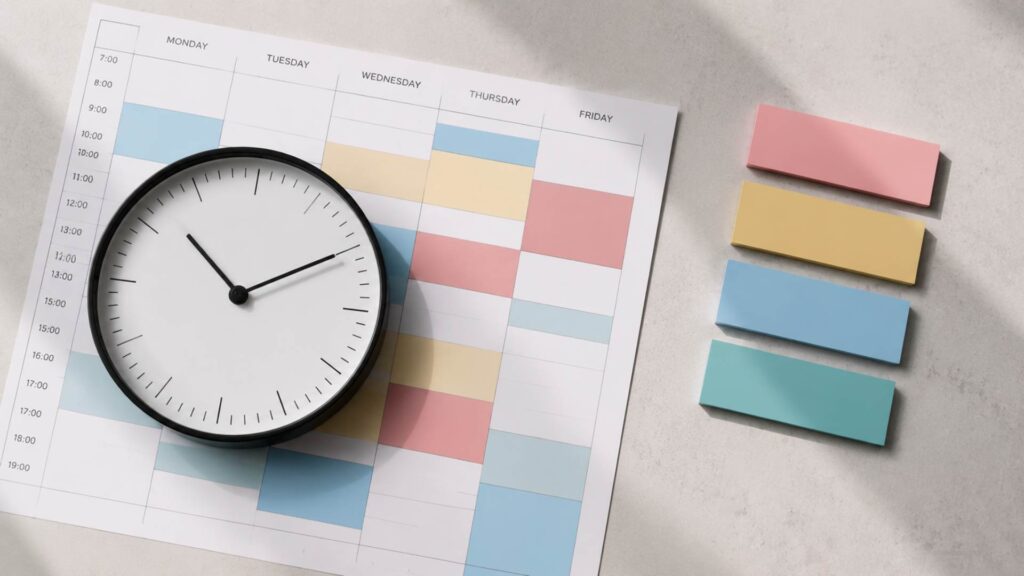
Time blocking is one of the most effective productivity hack approaches available because it takes the decision about what to work on next completely out of the equation. Assign specific hours of your day to specific categories of work before the day begins.
Block off time on your calendar to think, not just to meet. I set aside dedicated think time at least three times a week and protect those blocks the same way I protect a client call. When time has a home, it gets used.
Hack 2: Focus on Deep Work
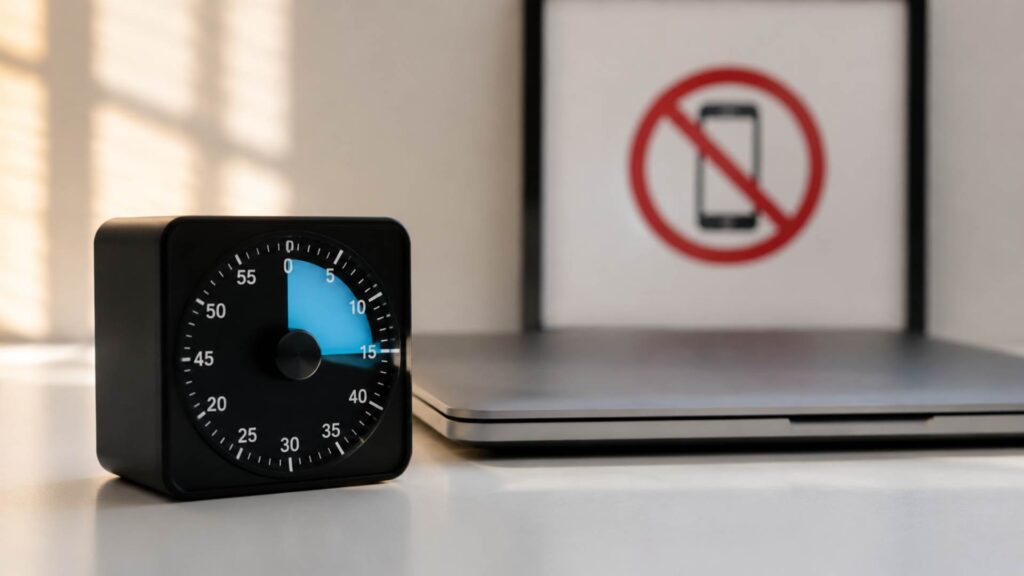
Cal Newport’s research on deep work consistently shows that focused, cognitively demanding work performed without interruption produces more output in less time than the fragmented alternative.
Research from the University of California Irvine found that it takes roughly 23 minutes to fully refocus after an interruption.
That number changes how you see every notification and every tap on the shoulder. Protecting two-hour blocks for your most important work each day is a productivity hack that compounds across weeks and months in a way that scattered effort never does.
Another Good Read: Best Stress Relief Toys for Adults
Hack 3: Prioritize High-Impact Tasks

Priority focus starts with an honest assessment of which tasks on your list actually move things forward. The majority of what fills a to-do list on a busy day is reactive. The items with genuine leverage tend to sit at the bottom, deferred to tomorrow, then the day after.
Every morning, identify the two or three tasks that produce real outcomes and protect time for those before the reactive work begins. That sequencing is a productivity hack that costs nothing and pays off immediately.
Hack 4: Batch Similar Tasks Together

Task batching reduces the cognitive cost of context switching between different types of work. Email responses, phone calls, administrative tasks, and creative work all operate on different mental frequencies. Moving between them repeatedly across the day drains focus faster than staying in a single mode for a defined period.
Group similar tasks into dedicated blocks and work through each batch completely before shifting context. The workflow efficiency improvement from this single adjustment surprises most people the first week they apply it.
Hack 5: Eliminate Digital Distractions

Distraction control is a productivity hack that requires environmental design rather than just willpower. Willpower depletes across the day, and by the afternoon it is a weak tool for resisting notification pulls.
The more effective approach is removing the distraction before the session begins. Phone in another room, social media apps logged out, website blockers active during deep work blocks. The goal is making distraction inconvenient enough that the default becomes focused work.
Hack 6: Follow a Morning Productivity Routine

The first hour of the day shapes the cognitive tone of everything that follows. A morning routine that does not start with the phone or email gives you a window of uncontaminated mental clarity that is genuinely harder to access later.
Movement, a brief planning session, and identifying the day’s priority focus before opening any inbox sets a different baseline than jumping straight into reactive mode. A consistent morning productivity routine is the foundation on which every other productivity hack performs better.
Hack 7: Use the 2-Minute Rule

The 2-minute rule is one of the cleaner productivity hacks for clearing mental overhead from small tasks. If something can be done in two minutes or less, do it immediately rather than adding it to the list.
The list accumulates drag when it fills up with small items that take more cognitive effort to track than to complete. Clearing those items on contact keeps the task management system focused on work that actually requires dedicated blocks of time.
Hack 8: Track and Review Your Day

A five-minute end-of-day review is a productivity hack that most people skip and then wonder why they keep repeating the same inefficient patterns. Write down what got done, what did not, and one specific change for tomorrow. This review builds the self-awareness feedback loop that drives genuine improvement over time. Without it, the same habits persist by default. The habit stacking approach works well here: attach the review to an existing end-of-day behavior so it runs automatically.
Hack 9: Apply the 80/20 Rule

The Pareto Principle holds that roughly 80 percent of results come from 20 percent of efforts. The practical application of this as a productivity hack is identifying which tasks in your current workflow belong to that 20 percent and protecting them from being crowded out by lower-leverage work.
Smart planning at the weekly level means asking which five tasks produce most of the meaningful output and scheduling those first. The remaining 80 percent of the task list gets whatever time remains.
Hack 10: Set Clear Daily Goals

Increase productivity by starting each day with a defined finish line. Without clear goals, the day expands to fill itself with whatever feels urgent rather than what actually matters. Three specific outcomes written down before 9am give the brain a target to organize effort around. If it is a crazy day and the plan gets disrupted, having those three goals written down makes it easier to return to them rather than losing the thread entirely.
Hack 11: Use a Task Management System
A workflow system does not need to be elaborate to work. What it needs to do is capture every task, organize it by priority, and surface the right work at the right time. The system that stays consistent across a full week outperforms the perfect system abandoned by Wednesday.
Todoist, Notion, a paper notebook, or a simple daily list all work if the discipline to use them daily is in place. Increase productivity first by picking one system and committing to it for a month before evaluating.
Hack 12: Work in Energy Cycles, Not Just Time
Energy management is the overlooked variable in most productivity hacks conversations. Scheduling four hours of deep cognitive work in the afternoon when your energy naturally drops produces far less output than two focused hours in your peak window.
Track your energy levels across a week and notice when focus, creativity, and decision-making feel sharpest. Schedule your highest-leverage work during those windows and use lower-energy periods for administrative and reactive tasks.
Hack 13: Take Strategic Breaks Using the Pomodoro Method

The Pomodoro method structures work into 25-minute focused sessions followed by 5-minute breaks, with a longer break after every four sessions. The structure works because it converts an open-ended task into a series of finite sprints, which reduces procrastination at the start and maintains focus through the middle.
If I am on a call or in a deep work block, I try to be 100 percent present. The break is where recovery happens, and recovery is what makes the next session possible. Strategic rest is a productivity hack as much as any active working technique.
Frequently Asked Questions (FAQs)
Do productivity apps actually help?
Apps help when they reduce friction between intention and action. The app that surfaces the right task at the right time without requiring extensive maintenance is the one that produces genuine workflow improvement. Apps that become more complex to maintain than the work they organize produce the opposite effect.
What is the single most impactful productivity change most people can make?
Based on how most people actually work, the shift from reactive to intentional daily structure produces the largest immediate improvement. Starting the day with a defined priority focus before opening email changes the entire character of the day that follows.
How long does it take to build productive habits?
Research published in the European Journal of Social Psychology found an average of 66 days for a new behavior to become automatic. Simple habits form faster. More complex workflow changes take longer. Consistency across the first month is the variable that determines whether the habit sticks.
Wrapping Up…
Getting more done in less time is not about forcing more hours into the day. It is about using the hours that already exist with considerably more intention. The productivity hacks in this guide work because they address the actual reasons output stays low: unclear priorities, scattered attention, reactive scheduling, and energy mismanagement.
Pick two or three that address your specific friction points and apply them consistently for a month before adding more. Increase productivity in layers rather than trying to overhaul everything at once. The compound effect of small, consistent improvements to how you work adds up to a fundamentally different output level over time, and that is what makes these habits worth building.